
- Chennai
- Tamil Nadu
- India
- World
- EntertainmentEntertainment
- Business
- Sports
- Lifestyle
- Technology
- Videos
- Explainers
- Editor's Picks

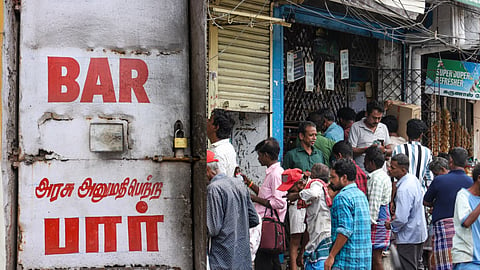
CHENNAI: Opposing the State government’s proposed move to privatise liquor retail outlets, the Tamil Nadu Tasmac Salesperson Welfare Association said it would go on a statewide protest on August 4 against the plan.
The association said thousands of employees and their family members would stage a hunger strike outside senior regional manager offices in Chennai, Salem, Coimbatore, Madurai, and Tiruchy a day before the Assembly session begins.
It also warned of an indefinite strike if the government went ahead with privatisation without addressing workers' concerns.
The protest has been planned after DT Next reported the TVK government decision to privatise Tasmac outlets in urban local bodies and municipalities. It is likely that necessary legal amendments on Prohibition and Excise Act will be tabled in the ensuing Assembly Session, sources had told this paper.
"If a decision on privatisation is taken without considering the workers, Tasmac shops across Tamil Nadu will not operate," said Ku Bharathi, president of the Tamil Nadu Tasmac Salesperson Welfare Association.
The association said around 23,000 employees currently work in Tasmac, down from about 36,000 in 2003, and alleged that workers who have spent more than two decades in the corporation remain on contract without regularisation.
The AITUC-affiliated Tamil Nadu Tasmac Employees Union also opposed the proposed move. Rejecting the reasons cited in favour of privatisation, such as improving quality or removing the government from liquor retail, its State president Periyasamy N said government oversight offered at least a measure of regulation over production and retail, whereas monitoring private operators would be far more difficult.
He also defended Tamil Nadu's government-run liquor retail model, saying it was introduced to prevent private syndicates from dominating the liquor trade and generating what he described as "non-productive money." Rather than privatising retail sales, he urged the government to retain control over the entire supply chain from production to distribution and gradually pursue prohibition through sustained awareness campaigns.