
- Chennai
- Tamil Nadu
- India
- World
- EntertainmentEntertainment
- Business
- Sports
- Lifestyle
- Technology
- Videos
- Explainers
- Editor's Picks

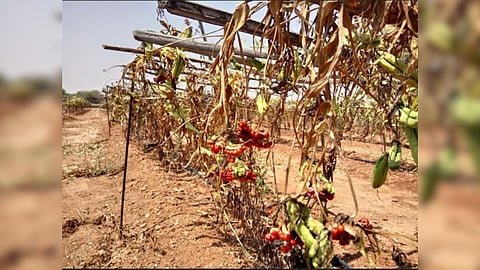
COIMBATORE: Researchers at the Tamil Nadu Agricultural University (TNAU) have developed a seed-based cultivation technology for gloriosa superba (Senganthal flower), a breakthrough that could reduce dependence on wild tuber collection and promote the sustainable cultivation of the medicinal plant.
The development comes at a crucial time, when this state flower of Tamil Nadu has been classified as an endangered species due to extensive extraction of its tubers from natural habitats. Farmers in Tirupur and neighbouring districts currently depend on tubers sourced from the wild, primarily from Andhra Pradesh and Maharashtra, to raise the crop for seed production.
The seeds of gloriosa superba, known as Kanvali Kilangu, are in high demand for their medicinal properties, with extracts used in the manufacture of several pharmaceutical products, including drugs used for the treatment of gout.
“Restrictions are already in place on unauthorised collection of tubers from the wild because of the endangered status of the plant. At some point in the future, the supply of tubers from neighbouring states itself may stop completely. If that happens, our farmers who depend on these tubers for cultivation will face a crisis. Seed germination technology is the only sustainable solution to overcome such a situation,” said T Saraswathi, Professor and Head, Department of Medicinal and Aromatic Crops, Horticultural College and Research Institute, TNAU.
She added that tubers brought from other regions could also introduce pests and diseases into local ecosystems, posing an additional risk to cultivation.
As part of the initiative, TNAU researchers collected germplasm of gloriosa superba from 110 locations across different states. After evaluating the collections based on various agronomic and quality parameters, the researchers shortlisted 10 promising accessions for further studies.
The selected seeds were subjected to germination trials and subsequent tuber development. Researchers noted that it generally takes up to four years for the seeds to develop harvestable tubers.
“The land requirement for cultivation through seeds is considerably lower than cultivation through tubers. We have also demonstrated to farmers the technology for producing tubers from seeds. In addition, TNAU is working on the development of improved and hybrid varieties, and the research is currently in progress,” Dr Saraswathi said.
Researchers have also focused on addressing soil health concerns associated with gloriosa superba cultivation. Being a perennial crop, farmers often apply large quantities of chemical pesticides over extended periods, leading to soil degradation and environmental concerns.
“Excessive use of chemicals has adversely affected soil health and contributed to declining yields in many farms cultivating gloriosa superba. To address this issue, we have developed the ‘Glory Trichoderma Consortium’, a bio-input designed to improve soil health and support sustainable cultivation,” said M Karthikeyan, Associate Professor, Department of Medicinal and Aromatic Crops, Horticultural College and Research Institute, TNAU.
He said the university plans to distribute the consortium free of cost to farmers in the coming months for them to know its results.
While value addition could potentially enhance returns from the crop, researchers said post-harvest processing technologies require substantial investment and are often beyond the reach of individual farmers. Since gloriosa superba falls under the category of medicinal and pharmaceutical crops, developing value-added products independently may not be economically viable for growers.
Instead, researchers have suggested that cultivators form Farmer Producer Organisations (FPOs) to strengthen collective bargaining power and ensure better price realisation for seeds.
“Through FPOs, farmers can collectively negotiate prices and prevent distress sales, thereby improving their overall income from cultivation,” the researchers said. The seed-based cultivation technology is expected to reduce dependence on wild-collected tubers, support conservation of the endangered species and provide a long-term sustainable solution for farmers engaged in gloriosa superba cultivation.
Tamil Nadu's state flower is classified as endangered
Farmers currently depend on wild-collected tubers from other states
Future tuber supply may be affected by conservation restrictions
Germplasm collected from 110 locations across India
Improved and hybrid varieties under development
The Glory Trichoderma Consortium is developed to improve soil health
Farmers advised to form FPOs for better price realisation
Gloriosa superba is cultivated across Tirupur, Dindigul, Karur and Erode districts and is grown in over 1,500 hectares
Gloriosa superba tubers are known in Tamil as Kanvali Kilangu