
- Chennai
- Tamil Nadu
- India
- World
- EntertainmentEntertainment
- Business
- Sports
- Lifestyle
- Technology
- Videos
- Explainers
- Editor's Picks

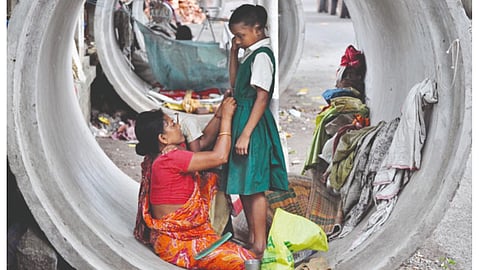
CHENNAI: Social activists working with the urban homeless have petitioned Chief Minister C Joseph Vijay, and urged the State government to announce a ‘Chief Minister’s Comprehensive Scheme for the Homeless’ to safeguard and fund homeless shelters in the upcoming Legislative Assembly session.
Around 115 urban homeless shelters are at risk of funding gaps across 38 urban local bodies in TN. The suggested scheme aims to secure safe, dignified, and rightful housing for the highly vulnerable urban homeless population.
The letter from Vanessa Peter, founder of the Information and Resource Centre for the Deprived Urban Communities (IRCDUC), highlighted severe systemic failure. “Homeless shelters were mandated in major cities by a 2010 Supreme Court order and initially funded under the National Urban Livelihoods Mission (NULM) in 2013,” it stated.
Central funding has been discontinued for shelters operating for over five years. Furthermore, except for the Chennai Corporation, no urban local body in Tamil Nadu has received a separate financial allocation for these facilities, the letter said.
Around 115 Shelter for Urban Homeless (SUH) facilities in Tamil Nadu have completed five years and are no longer supported under the current NULM funding framework. Of which 96 shelters are for men, women, and other vulnerable groups, 19 are for hospital caregivers, and 38 are in Urban Local Bodies (ULBs) across the state.
“Cities with the highest number of shelters without NULM support are Chennai (47), Madurai (14), Salem and Tiruchy (5 each), Coimbatore (4) and Tiruvanelveli (3),” said Vanessa. “Consequently, many shelters run by NGOs operate without official MoUs or adequate budgets for critical services like rescue, medical care, mental health support, and rehabilitation.”
To resolve these deficiencies, the petition outlines four major demands for the state government: to transition existing shelters into a dedicated, state-funded special scheme. Inclusive state policy establishes a comprehensive framework for the protection, livelihood, and social integration of the homeless, featuring specialised shelters for women, the elderly, transgender individuals, and persons with disabilities.
The letter emphasises that over 90% of Tamil Nadu’s street population belongs to Scheduled Caste (SC) communities, making the initiative a vital step toward protecting the state’s most socially and economically marginalised citizens.
Corporation Commissioner GS Sameeran told DT Next, “The 57 homeless shelters in GCC are funded by the Corporation and run by NGOs. Funding will not be stopped.”