
- Chennai
- Tamil Nadu
- India
- World
- EntertainmentEntertainment
- Business
- Sports
- Lifestyle
- Technology
- Videos
- Explainers
- Editor's Picks

CHENNAI: Fishing community from the Kovalam sub-basin and environmental groups on Monday urged the State government to drop the proposed Mamallan Reservoir project, alleging that studies by the Water Resources Department (WRD) and IIT Madras had failed to adequately assess the risks of storm surges and seawater intrusion, which could render the freshwater reservoir ineffective.
The Mamallan Reservoir is being developed as the city's sixth major drinking water source at an estimated cost of Rs 342.60 crore.
Located in Chengalpattu district along the East Coast Road (ECR), the project spans the Kovalam-Nemmeli backwater basin. The proposed reservoir will cover 5,161 acres and is designed to store 1.65 thousand million cubic feet (TMC) of water.
Fishermen and environmental activists opposed the project, contending that converting the existing saltwater basin into a freshwater reservoir would cause irreversible damage to the coastal ecosystem.
Citing government-commissioned coastal inundation maps, they said large portions of the proposed reservoir site could be submerged by seawater during storm surges of 3.5 to 4.5 metres.
According to them, neither the WRD nor IIT Madras had adequately evaluated these risks while preparing the project's reports and technical assessments.
Addressing a press conference at the Chennai Press Club on Monday, R Narayanan, a fisherman from Kovalam, said local communities had long observed seawater inundation in the marshland during spring tides and the monsoon season. He argued that the embankments proposed under the project would not be sufficient to prevent seawater intrusion.
The Chennai Climate Action Group said the IIT Madras technical evaluation had focused primarily on freshwater inflows from the western catchment and treated the sea merely as a drainage outlet for excess water. During storm surge events, however, the discharge structures could allow seawater to enter the reservoir, it warned.
Dr Vishwaja Sampath of the Chennai Climate Action Group said the project risked turning the proposed freshwater reservoir into a "large saltwater lake" if seawater breached the bunds. She also questioned the validity of the Coastal Regulation Zone (CRZ) clearance process if ocean and tidal dynamics had not been properly studied.
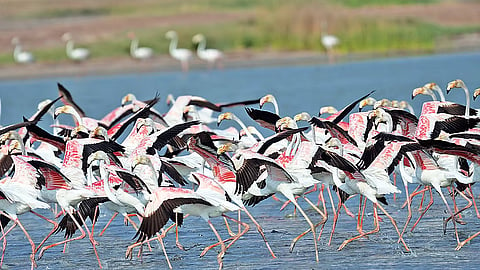
She further highlighted the ecological importance of the marshland, saying it supports more than 135 species, including migratory birds. Converting the wetland into a reservoir, she warned, could eliminate 4,375 acres of natural flood-buffering area, increasing flood risks for nearby settlements such as Kelambakkam, Tiruvidanthai and Mamallapuram.