
- Chennai
- Tamil Nadu
- India
- World
- EntertainmentEntertainment
- Business
- Sports
- Lifestyle
- Technology
- Videos
- Explainers
- Editor's Picks

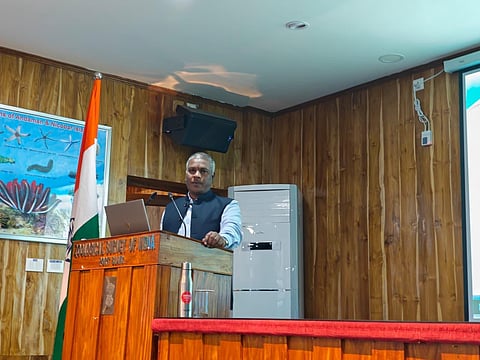
SRI VIJAYA PURAM ( PORT BLAIR): The proposed National Coral Reef Research Institute (NCRRI) in the Andaman and Nicobar Islands is set to become operational by 2029, with the tender process expected to be completed in the coming months, according to C Sivaperuman, Scientist–F and Officer-in-Charge of the Zoological Survey of India (ZSI), Andaman and Nicobar Regional Centre.
“The ZSI is the nodal agency to facilitate the establishment of NCRRI. In a few months, the tender will be finalised and work will commence and in next three years (2029) the NCRRI will start functioning,” Sivaperuman told DT Next.
The NCRRI, conceived as a national-level institute for coral reef research in Indian waters, will be anchored in the archipelago, one of India’s most significant marine biodiversity regions. The islands host extensive coral reef systems and associated marine life, forming a critical component of the country’s coastal ecology.
“The NCRRI will focus on long-term monitoring of coral reef ecosystems, creation of a comprehensive database on coral reefs and associated fauna, and detailed studies on coral reproduction, spawning, larval development and settlement,” Sivaperuman stated. “The institute will also undertake large-scale restoration of damaged reef areas, particularly those impacted by climate change and tourism pressure, and monitor coral diseases across Indian waters.”
Further, it will examine carbon sequestration potential of reef ecosystems and promote long-term capacity building to mitigate climate-related impacts on marine biodiversity.
Once operational, the NCRRI is expected to serve as a national hub for coral reef science, support collaborative research, strengthen policy inputs on marine conservation and provide scientific backing for sustainable coastal management in the face of rising climatic and anthropogenic pressures.
The Andaman and Nicobar Regional Centre of ZSI, established on April 21, 1977, is one of the 16 regional centres of the premier institution under the Ministry of Environment, Forest and Climate Change.