
- Chennai
- Tamil Nadu
- India
- World
- EntertainmentEntertainment
- Business
- Sports
- Lifestyle
- Technology
- Videos
- Explainers
- Editor's Picks

CHENNAI: What if Chennai's beloved beach bajji had found its way into a Japanese izakaya? What if Marina Beach sundal carried the bright, punchy flavours of Thailand? Or if kalaki had travelled across the Palk Strait before making its way back to Chennai?
These weren't just playful questions thrown around over dinner. They became the foundation of Borderless Madras, a one-night tasting experience curated by chef Goku and Masterchef Tamil Finalist Dr Nithya Franklyn, who reimagined Chennai's most nostalgic street foods through the culinary traditions of countries that have long shared cultural and historical ties with Tamil cuisine.
The idea, however, was never to create fusion for novelty's sake.
"We wanted to do something fun with Chennai street food instead of presenting it in the same way. Since I specialise in Tamil diaspora food, I kept thinking about how dishes naturally evolve when communities migrate. We imagined Chennai's street food through that lens," says Goku.
Dr Nithya says "People don't usually associate Chennai with street food the way they do other cities. But for anyone who has grown up here, these foods carry memories . Evenings at the beach, roadside stalls after school, late-night kulfis. We wanted to elevate those memories without taking away what made them familiar." For both of them, preserving that sense of familiarity became the guiding principle while building the menu.
"We didn't want to change the main ingredient. The texture, the feeling and the nostalgia had to remain the same. We simply imagined how these dishes would have evolved if they belonged to another country," explains Dr Nithya
Each course came with a story. Before it reached the table, Goku and Dr Nithya explained the inspiration behind the dish, and after diners had tasted it, they returned to reveal the cultural references and techniques that shaped it.
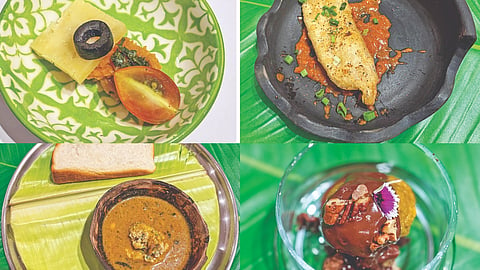
The Bhajji from Izakaya was one of the evening's highlights. Crisp slices of raw banana were coated in an airy tempura batter before being paired with a soy-chilli dipping sauce finished with spring onions. It still tasted unmistakably like the beachside bajji Chennai knows, but borrowed the lightness and restraint of Japanese cooking. It was familiar enough to evoke nostalgia, yet different enough to make you pause after every bite.
"We looked for dishes in other cuisines that naturally resembled ours. Bajji and tempura already speak a similar language. Instead of forcing flavours together, we matched foods that already shared common ground so the story felt authentic," explains Goku.
Perhaps the biggest surprise of the evening arrived as a bowl of Parisian Soup, Made from banana stems, challenged every expectation of what vazhaithandu could become. Smooth, deeply comforting and layered with Cajun seasoning and shallots, it transformed an ingredient usually reserved for poriyals and kootu into something elegant without stripping away its earthy character.
The Spanish Murukku Tapas proved equally memorable. Crisp murukku sandwiched with Manchego cheese, cherry tomato salsa and coriander chimichurri turned an everyday tea-time snack into a sophisticated small plate. Every bite still delivered the crunch Chennai knows so well, only dressed in Spanish accents."Tapas is built around small, shareable bites, much like our own snack culture. So the murukku sandwich naturally lent itself to that style instead of feeling like forced fusion," says Goku.
The Phuket Beach Sundal brought a refreshing change of pace. Served in a paper cone reminiscent of the way sundal is sold along Marina Beach, it combined black chickpeas with raw mango, roasted peanuts, fresh herbs and a zesty Thai-style dressing. Bright, tangy and layered with just the right amount of heat, it retained the comforting familiarity of Chennai's beachside favourite while borrowing the vibrant flavours of Thailand. It was one of those dishes that quietly captured the essence of the theme
"We chose countries and dishes that naturally had something in common with ours. Mango salad is very common in Thailand, so pairing it with Chennai's beach sundal felt like a story that already existed rather than something we forced together," says Goku.
Served with freshly baked Sri Lankan roast paan, the dish recreated the experience of kalaki without using eggs. Instead, silken tofu and besan were transformed into a scramble that remarkably mimicked the soft richness of egg, accompanied by a deeply flavourful Jaffna-style curry."Everything on the table was made by us, including the bread. Roast paan is such an important part of Sri Lankan homes and sharing bread is a huge part of their culture. We wanted to recreate that experience. For the vegetarian kalaki, we worked with silken tofu and besan because we wanted people to genuinely feel like they were eating egg," says Goku.
Dr Nithya says every dish was designed to evoke an emotion before impressing diners with technique. "Whether it was through the texture, appearance or flavour, we wanted every course to remind people of the Chennai street food they grew up eating, even if it looked completely different on the plate," she says
Dessert arrived as a familiar comfort. The Brownie Dum Ka Root paired the earthy richness of the traditional dum ka roat with warm dark chocolate, But it was the Mexican Paal Ice that stole the show. Reimagined as a creamy gelato, it was topped with a strawberry and tamarind sauce, finished with a subtle hint of spice inspired by the sweet-and-spicy flavour combinations often found in Mexican desserts. The tanginess of the tamarind lifted the sweetness of the strawberries.
"I think most people said that dessert was their favourite. Nobody expected strawberry and tamarind to brighten the flavours of the ice cream the way it did," Goku says with a laugh.
"We're culinary storytellers," Goku says. "When people know the story behind an ingredient or a dish, they value it much more than if they simply eat it. That's what these dinners are about." he concluded .