
- Chennai
- Tamil Nadu
- India
- World
- EntertainmentEntertainment
- Business
- Sports
- Lifestyle
- Technology
- Videos
- Explainers
- Editor's Picks

CHENNAI: For generations, sports has been woven into the fabric of Chennai’s life. A decade ago, it was common to see children spilling onto the streets after school, chalking stumps onto compound walls and batting till dusk. Those with access to larger grounds played football, while others took to kabaddi, volleyball or athletics, training on campus long after classes had ended.
Today, that everyday sporting culture has thinned. With rapid urbanisation, the sight of children playing in the streets has become rare. Yet the city’s love for sport has not vanished, only shifted. The M A Chidambaram Stadium still draws admirers even in the off-season, with people stopping to photograph it from the outside. And whenever the Chennai Super Kings take the field, the city is united — eyes glued to television screens in trains, cafes and public squares. Chennai still cheers passionately, but increasingly, it cheers from the sidelines.
The reasons are familiar: academic pressure, career anxieties, the loss of open grounds, and the steady privatisation of play. In many ways, Chennai has become a city that watches sport more than it plays it.
Initiatives in the works
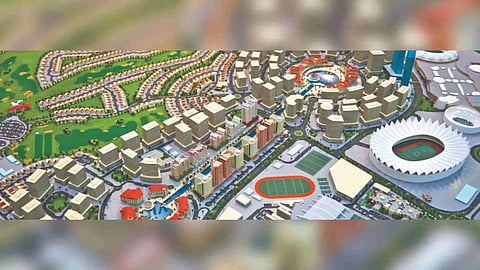
To its credit, the city is beginning to address these concerns. The Chennai Metropolitan Development Authority (CMDA) has launched plans for a “Global Sports City” near Semmencherry, a 100-acre complex expected to include stadiums, academies and training centres. Though still in its early stages, it signals intent, a desire to put Chennai back on India’s sporting map.
Other initiatives are also under way. The Rajarathinam Stadium in Egmore is set for a major upgrade, with an eight-lane synthetic track in the works, though bureaucratic delays have slowed progress. The CMDA has approved a modern football facility in Shenoy Nagar, while the Greater Chennai Corporation (GCC) is experimenting with its Velachery–Perungudi “health corridor”, turning a three-kilometre stretch of road into a pedestrian, cycling and skating zone on weekends.
These projects reflect ambition, but for most residents, access to affordable and quality facilities remains uneven. Many neighbourhoods still lack open spaces or well-kept courts. Booking systems are patchy, maintenance irregular, and women and children often find themselves excluded. The result is a widening gap between the city’s passion for sport and its opportunity to practise it.
Lessons from abroad
In several European cities, sport remains a community activity well into adulthood. Parks and public grounds double as neighbourhood sports hubs. In Germany, the Sport-park Duisburg stretches across 200 hectares, offering facilities for canoeing, athletics, skating and football — accessible to both professionals and amateurs. Near Paris, the Parc des Sports de Marville integrates multiple sports within one easily reachable complex. The principle is simple: sporting spaces belong not only to athletes, but to communities.