
- Chennai
- Tamil Nadu
- India
- World
- EntertainmentEntertainment
- Business
- Sports
- Lifestyle
- Technology
- Videos
- Explainers
- Editor's Picks
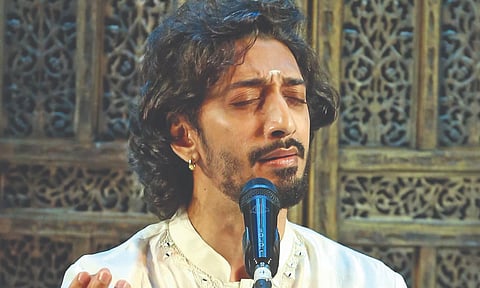
Born in Ranipet and later relocated to Chennai, it was Girijashankar Sundaresan's grandparents who introduced him to music. His childhood was filled with attending concerts and listening to illustrious artistes and bhajans. With great practice, discipline, hard work and dedication, the Carnatic vocalist is the first-generation musician in his family to perform on stage.
Notably, he has performed in all major cities, including Chennai, Kolkata, New Delhi and Mumbai. He has also made his mark in the United States. Each year, during the Margazhi season, veenas breathe, mridangams murmur, and voices rise like incense. In Chennai’s quiet streets, music becomes prayer, time slows, and every note carries devotion, discipline, and an ancient, awakening calm.
Girijashankar Sundaresan talks to DT Next about his journey, upcoming performances and what Margazhi means to classical exponents.
Q and A
1. You’re a first-generation stage-performing musician in your family. How did stepping into a field without a direct musical lineage influence your growth, challenges, and artistic identity?
My grandparents were well-versed in music, and my parents were rasikas. Initially, it was quite challenging. But, I believe, everything is a part of exploring and understanding how the field works. We are here to learn, and everybody has their own journey. I truly cherish every lost opportunity and failure in the journey. Overall, music has held the fort.
2. Your training under Chitravina N Narasimhan and N Ravikiran is considered a major pillar of your musical foundation. What are some nuanced lessons—beyond technique—that deeply transformed your approach to music?
The biggest blessing of my life is coming under the wings of my gurus, Chitravina N Narasimhan and N Ravikiran. They are the pillars who showed me the true meaning of music. Narasimhan sir always says, ‘Though our Carnatic music is deeply rooted in grammar and follows a strict regime, the music has to touch the soul.’ And, this is something I completely trust and strive to do. Ravikiran sir emphasises mindful practice rather than randomly focusing on one thing for hours. He also underscores thinking in terms of music, even on days we are not singing.
3. You often emphasise pitch precision, lyrical sensitivity and rhythmic clarity. Can you walk us through how you internalised these elements, and how they manifest differently in a live Margazhi kutcheri setting?
pitch precision, lyrical sensitivity and rhythmic clarity are the basics that need to be on the right note for any genre of music. This emphasis has been the key to the success stories of many musical legends in the past. I believe that we do not practice for a concert; we practise, and the concert happens. These elements are a part of all my rehearsals and performances, including a live Margazhi kutcheri setting. It has become a part of how I function.
4. Margazhi is not just a season but an emotional and cultural space for Carnatic musicians. What does this season personally signify to you, both musically and spiritually?
Ever since we started performing, Margazhi has been a part of our lives. During the initial days, it used to be the time to rejoice and revel in the music of other exponents. Eventually, when I started performing, it became a test to showcase my years of learning.
Every year, we try to do something different, like learning new compositions and also showcasing the whole year’s work during Margazhi. This season is definitely more than just a performance for many musicians. It is a test of mind, body and skills.
5. Your performances often highlight lesser-heard compositions. Is there a conscious intention to curate something distinctive for the Margazhi audience this year?
I often lean towards presenting underexplored compositions. There are many compositions I have learnt over the years, but have not performed on stage yet. I go back to those notes and try to fit the portions into my new compositions.
Innovation is definitely possible with new compositions, like exploring new ragams. This brings new freshness. But rasikas expect innovations within the confines of traditional space.
This year, I will be showcasing my old repertoires.
6. This season, what themes or emotional arcs are you hoping to explore through your concerts? Are there particular ragas, composers, or ideas you feel especially connected to right now?
This season is more special because I have been mindful of the number of concerts I perform, and I have understood what my body can and cannot do. This awareness came with age and wisdom (laughs). So far, it has been a wonderful experience, and I am collaborating with various established artistes, including Dr Vyjayantimala Bali, Vandana Srinivasan and Sunil Kumar, among others.
Girijashankar Sundaresan’s upcoming Margazhi performance will take place at Narada Gana Sabha on December 20.
