

Free Trade Agreement with UK shot in arm for Tirupur; textile industry eyes big rise in exports
With this, exporting clusters such as Tirupur and Karur would have tremendous opportunities to achieve exponential growth
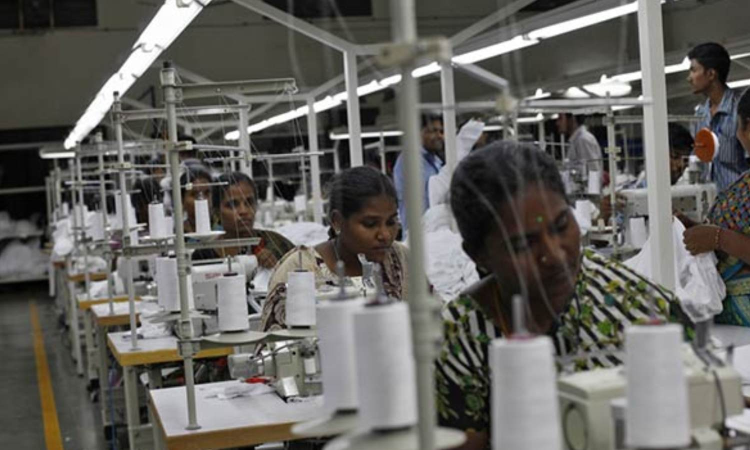
Free Trade Agreement with UK shot in arm for Tirupur
COIMBATORE: The State’s textile sector is poised for its best times as the Free Trade Agreement (FTA) signed between India and the United Kingdom is expected to double bilateral trade between the two countries, presenting tremendous opportunities for Tamil Nadu.
“The bilateral trade between the two countries is expected to double from the current US$56 billion by 2030. The textile sector, particularly ready-made garments and made-up textiles with minimal import content, is likely to contribute a larger share to this growth,” said SK Sundararaman, chairman of The Southern India Mills Association (SIMA).
With this, exporting clusters such as Tirupur and Karur would have tremendous opportunities to achieve exponential growth. Tamil Nadu, being the single largest textile manufacturing State in the country, with a lion’s share of nearly one-third of the total capacity, is likely to emerge as a major beneficiary, Sundararaman added.
Pointing out that export orders for cotton knitted garments and kitchen linen are already on an upward trend, strengthened by long-term business commitments, Sundararaman said that the unique policies such as National Technical Textile Mission (NTTM), Production Linked Incentive (PLI) Scheme, and PM MITRA Scheme would attract huge investments and create jobs for lakhs. He was also confident about the positive impact of the recently launched Mission for Cotton Productivity scheme, launched to increase cotton textile exports.
Stakeholders note that the Indian textiles and clothing industry is highly competitive in terms of manufacturing excellence, despite predominantly comprising MSMEs, through consolidation, cluster development initiatives, and the provision of constant support for MSME units by state and central governments. However, India is lagging mainly due to tariff barriers. Indian textile goods attract duties ranging from four to 36 per cent in different markets, while several competing countries, including Bangladesh, Vietnam, Sri Lanka, and Pakistan, have duty-free access.