
- Chennai
- Tamil Nadu
- India
- World
- EntertainmentEntertainment
- Business
- Sports
- Lifestyle
- Technology
- Videos
- Explainers
- Editor's Picks
CHENNAI: When most people were seeking stability during the uncertain days of 2020, Kirthana Raamsukaesh decided to take a leap of faith, one that would change not just her life but the lives of hundreds of canines across the city.
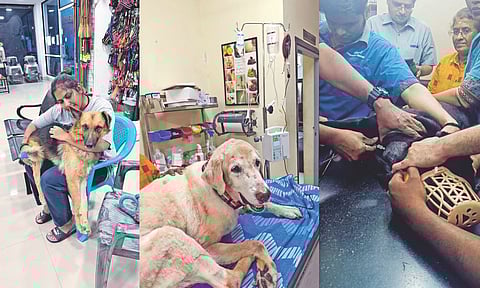
Talking to DT Next, she shares insights about their latest initiative-- Canine Blood Donation, a practice still unfamiliar to many pet owners. “We rescue injured, wounded, and abandoned animals from the streets and provide them with treatment and care. Our rehabilitation shelter offers a safe space for abandoned dogs that cannot be adopted, while injured ones are treated until they recover, after which they are released back into their territories,” remarks Kirthana.
Over time, the NGO expanded its mission by launching the Vetri Pet Food Bank to ensure that even street animals don’t go hungry. The organisation believes that this extends beyond rescuing the strays. Recently, they introduced a canine blood donor program, which has already saved numerous lives.
Canine Blood Donation:
Canine blood donation involves a medical procedure where a healthy dog donates blood to help another dog in need, often during surgery, illness and anemic situations.
“At Hope for Critters, our Canine Blood Donor Program follows strict ethical and veterinary guidelines to ensure donor safety. We maintain a digital database with each dog’s medical history, vaccination records, blood type, and last donation date.
“A minimum gap of 3–4 months is observed between donations, and all dogs are clinically examined before every procedure. Since canine blood can be stored for only about 24 hours, donations and transfusions are coordinated in real time. Donors are screened through CBC, biochemistry, and tick-fever checks. The age of donor dogs should range between 2 and 7 years. Costs for pre-screening are generally covered by the recipient’s family. All donations are voluntary, free, and lifesaving,” she says.
Dogs have unique blood groups called DEA (Dog Erythrocyte Antigen). DEA 1 is the most clinically significant, and matching is crucial to avoid complications. Blood types are tested in veterinary hospitals and recorded for safe future transfusions.
Hope for Critters maintains a digital database containing each donor dog’s medical history, vaccination records, blood type, and last donation date.
Looking ahead, Hope for Critters plans to enhance disaster response with a motorboat, expand volunteer training in first aid and rescue, and strengthen Animal Birth Control initiatives to manage the stray population humanely. “Our vision is a future where no animal is left stranded, hungry, or without care,” Kirthana says.
“Our dog underwent major surgery in January, and we needed blood transfusions three times. The first time, we managed to find a donor, but the second and third times, it was quite difficult. When we reached out, several dog rescuers recommended only one name, “Kirthana is truly a lifesaver. She helped us with donors immediately, and the transfusion could happen without delay. Not once but twice. Many pet owners aren’t aware of the services yet, but thanks to Kirthana, she is making all efforts to increase awareness and is slowly growing,” a pet parent, who chooses to remain anonymous, tells the reporter.
The age of donor dogs should range between 2 and 7 years. Costs for pre-screening are generally covered by the recipient’s familyr onlyt
–Kirthana Raamsukaesh, Founder, Hope For Critters
