
- Chennai
- Tamil Nadu
- India
- World
- EntertainmentEntertainment
- Business
- Sports
- Lifestyle
- Technology
- Videos
- Explainers
- Editor's Picks

What was the idea behind Zoho for Startups when it began in 2017?
■ We started when the word startup was just beginning to take shape in India’s policy vocabulary. The government had started defining who qualified as a startup, and Zoho had just launched Zoho One, our integrated suite of business applications. We wanted early-stage founders to have access to reliable, privacy-conscious software from the beginning so that they don’t have to make expensive mistakes while setting up. The programme works through incubators, accelerators, and co-working spaces that already run pitch or demo days. Selected startups receive Zoho wallet credits worth Rs 1 lakh, which is valid for 360 days. During that period, they can choose individual tools or use the full suite. The idea is simple: give them time to build their foundations digitally before they start spending on software.
What kind of support do startups receive?
■ The programme is not just about software distribution. We realised very early that tools are useful only when founders understand how to use them effectively. So, we bring in knowledge partners who help startups define what kind of mentorship they actually need. Many founders say they need guidance but can’t pinpoint the area – finance, marketing, or compliance. We help them articulate that first, and then connect them with mentors who can offer specific, time-bound support. We also try to bridge technical and entrepreneurial expertise. For instance, retired or transitioning scientists from ISRO are now engaging with deep-tech startups but often lack startup exposure. Bringing science and business together is something we’re actively work on.
You’ve cautioned startups to be wary of free or heavily subsidised credit offers from big tech firms. Why?
■ Because ‘free’ isn’t always free. When a company offers tens of thousands of dollars in credits, it’s worth asking why their products need such large incentives to be adopted. Often, the trade-off is in pricing later, or in data access. At Zoho, our approach is deliberately plain. There are no third-party trackers, no advertising layers, and no surprise charges. When your credits end, you can downgrade, extend, or even walk away. And your data remains yours. It’s a frill-free model, but a transparent one. The goal is not to compete with other offers, but to ensure founders know what they’re signing up for.
Zoho built a global SaaS company without outside funding. Can that still be done today?
■ It depends entirely on timing and context. Zoho grew during a period when cloud computing was new and global competition was limited. That kind of timing advantage doesn’t exist anymore. Sridhar Vembu often says that founders shouldn’t feel obliged to bootstrap just because Zoho did. If external funding helps you grow responsibly, take it but treat that money like it’s your own. Spend it carefully, choose priorities wisely, and don’t mistake valuation for value. Bootstrapping is one way to build resilience; raising capital responsibly is another. What matters is how sustainably you grow, not the route you take.
How do you assess TN’s startup landscape today?
■ It’s still young but catching up fast. For a long time, Tamil Nadu didn’t have the institutional infrastructure that Telangana or Kerala had through hubs such as T-Hub or KSUM. Startup Tamil Nadu has filled that gap by creating a formal framework and clearer policy direction. A decade ago, many Tamil Nadu founders moved to Bengaluru or Delhi to find opportunities. Today, many have returned as mentors, investors, or policy contributors. What we lost in time and talent, we’re regaining through experience. We’re also seeing new areas emerge: deep tech, space tech, green tech fields that didn’t even exist in the State’s startup vocabulary a few years ago. It’s a positive transition, but the challenge now is consistency, building systems that last beyond the initial excitement.
Many founders say they need mentorship and networks. How do you view that?
■ Mentorship is crucial, but it needs to be better defined. You have to know whether you need help in fundraising, hiring, or strategy. The onus is on both sides: mentors must have time and relevant experience, and founders must come prepared. We’ve learned that most useful mentoring begins when founders understand their gaps. Our role is to create that clarity. It’s not a one-size-fits-all model, it’s about building an ecosystem where people can ask sharper questions and learn faster.
Why does Zoho run this programme?
■ Because startups already face enough challenges. Be it funding uncertainty, competition, burnout. If we can remove even one layer of that difficulty by giving them access to reliable, homegrown tools, that’s enough contribution. We’ve been bootstrapped for 30 years, and this is how we give back to the ecosystem. If 10,000 startups can someday say they built using Zoho tools, that’s a legacy we’re proud to leave.
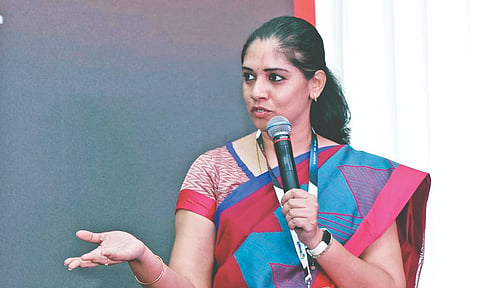
Many founders say they need guidance but can’t pinpoint the area – finance, marketing, or compliance. We help them articulate that first, and then connect them with mentors who can offer specific, time-bound support – Kuppulakshmi Krishnamoorthy, Global Head, Zoho for Startups