
- Chennai
- Tamil Nadu
- India
- World
- EntertainmentEntertainment
- Business
- Sports
- Lifestyle
- Technology
- Videos
- Explainers
- Editor's Picks

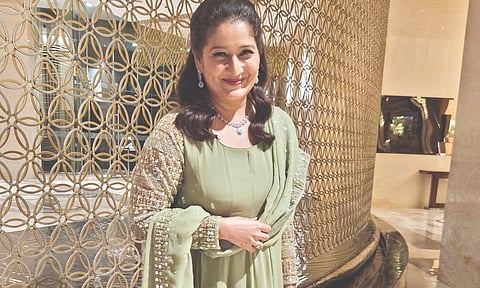
CHENNAI: Laila makes her OTT debut with Move On Rajeshwari, a Tamil vertical micro-drama series. In an interview with DT Next, she talks about the new format, changing filmmaking technology and how her approach to acting has evolved.
What drew you to Move On Rajeshwari and made you say yes to the role?
Move On Rajeshwari is a Tamil vertical micro-drama series that explores finding love after 40. Rajeshwari is a strong, successful woman who has everything under control, except finding a life partner. Her niece, Priya, pushes her to meet new people and find love again. The series blends comedy with serious moments. I liked Rajeshwari because she is confident, professional and powerful. The character was different and interesting, and that made me say yes to the role. I hope the story gives hope to someone who is like Rajeshwari in real life.
You’ve worked extensively in feature films, and Move On Rajeshwari is a vertical series where each episode is under two minutes. How different was the filming process for you?
Micro dramas have a smaller budget, so the shoot happens very quickly. We completed 60 episodes in just four days. In a feature film, we usually shoot a maximum of three scenes a day, but here we were doing nearly 20 scenes a day. It was definitely a new experience for me, but I really enjoyed it. The fast-paced process was challenging, but it was also fun and gave me a chance to experience a different style of filmmaking.
What do you think about the transformation of watching a series on a vertical screen?
Vertical screens are becoming popular because people watch almost everything on their phones now. I even prefer the vertical format because I don’t like changing my phone’s position. It is simple and convenient. People also want quick entertainment, especially while travelling on public transport or when they have some free time. I think vertical series are becoming popular because they fit easily into our daily lives.
You stepped away from acting at a time when you were already an established and successful actor. Looking back, what did that break mean to you?
It was a conscious choice and decision that I made. When I had my children, I felt it would be better to quit acting for a little while and raise them myself. I wanted to bring them up on my own, and I felt I couldn’t trust anyone else with that responsibility. I believe nobody can do that job better than me. So, it was a decision I took willingly.
What was the biggest change you noticed in the industry?
Technology has changed a lot. Earlier, we used high-intensity lights that were very hot and uncomfortable, but now LED lights make shooting easier. We also have monitors to watch our performance after each shot, which is very convenient. Digital technology also allows us to do more takes, unlike earlier when everything was more restricted. When I talk to people I worked with before, we often have nostalgic conversations about how things were back then and how different it is now. We laugh and say, “Once upon a time,” and remember those days.
When you look at Laila, who was working in films in the early 2000s, and the actor you are today, what do you think has changed most in the way you approach a role?
Now, I prefer roles that give me scope to perform and explore different emotions. I think the Laila of the 2000s would have looked for big-budget films and big actors, but today, I am more focused on performance-oriented roles.