
- Chennai
- Tamil Nadu
- India
- World
- EntertainmentEntertainment
- Business
- Sports
- Lifestyle
- Technology
- Videos
- Explainers
- Editor's Picks
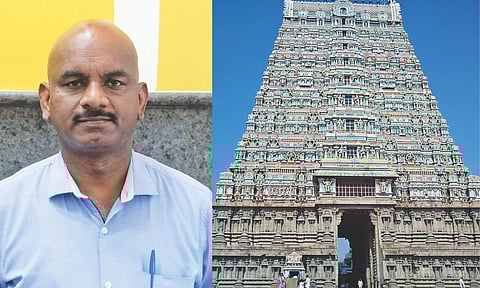
TENKASI, cradled by the Western Ghats and wrapped in the fragrance of the Tamiraparani plains, is a town that wears its devotion lightly yet unmistakably. At its heart stands the Kasi Viswanathar Temple, a structure that has watched monsoons roll in from the hills, witnessed dynasties rise and recede, and quietly preserved a connection far older than the town itself: its living bond with Kashi.
To arrive in Tenkasi is to step into a southern city that seems to hum with a northern heartbeat. Pilgrims often speak of a familiar pull as soon as they enter its temple streets, as if an invisible thread between the Ganga and the Ghats gently tightens around them. The very name of the town, then meaning ‘South’ and ‘Kashi’ meaning the sacred northern city, feels less like a label and more like a promise. It suggests that the sanctity of Kashi has been invited, welcomed and enshrined here with conviction. The tone of the bells, the cadence of the chants, and the cool light of the sanctum all seem to evoke memories of another city far away.
The resemblance between the two cities is neither accidental nor merely symbolic. Tenkasi’s founders, priests and pilgrims carried within them a longing for Kashi that distance could not diminish. What emerged was not an imitation but a continuation, a southern chapter of a northern story. This gives rise to the question that lingers beneath the temple’s soaring gopuram: how did this bridge between two distant regions take shape, and why has it endured with such tenderness across six centuries?
The story begins with a profound yearning, the kind that pulls people across rivers, mountains and eras. Medieval Tamil rulers and scholars regarded Kashi as the radiant centre of sacred knowledge, a place where the divine and the earthly existed with ease. For many in the deep south, reaching the holy city on the Ganga required immense effort and weeks of travel.
Local tradition suggests that the Kasi Viswanathar Temple was conceived to bring Kashi closer to those who could not undertake the difficult northern journey. It was built not as an imitation but as an invocation, a place where the same divine presence could be experienced without crossing the Vindhyas.
This intention is clear in its architecture. The elegant gopuram rises like a flameshaped mountain and seems to gesture towards the sky in a manner reminiscent of the shikhara of Kashi. The sanctum, where Lord Viswanathar resides, carries the same austerity and quiet radiance associated with the northern shrine. Pilgrims often say that walking through its corridors feels like turning a page of the same sacred manuscript, first written in the north and illuminated again in the south.
Tenkasi is unusual not because it mirrors a northern shrine, but because it absorbs Kashi into its civic identity. The temple is not a monument copying another but a living part of a shared spiritual geography. This link became a pathway through which ideas, stories and devotional practices travelled between the two regions.
Priests moving between the temples brought rituals, commentary, language and lore. Devotees returning from the Ganga carried songs that blended naturally with Tamil hymns. As a result, one encounters in Tenkasi an experience that is both deeply Tamil and unmistakably connected to Varanasi, as though the two cities have been holding a quiet conversation across centuries.
For generations, the temple served as a sacred alternative for those unable to travel to Kashi. Worshippers believed that performing rites in Tenkasi held the same spiritual merit as performing them in the northern city. Festivals in Tenkasi often echoed those in Kashi, allowing devotees to feel aligned with the spiritual rhythms of both cities.
Even today, during Karthigai Deepam, the sight of lamps glowing in Tenkasi resembles the gentle light of lamps floating on the Ganga. The stories of Lord Shiva as the eternal light, revered as the Jyotirlinga in Kashi and as the Swayambhu in Tenkasi, strengthen this connection further. They are like twin flames glowing in different winds.
Although separated by more than two thousand kilometres, Kashi and Tenkasi share a relationship that is part memory, part devotion and part cultural inheritance. Modern initiatives such as the Kashi Tamil Sangamam highlight this ancient connection and remind us that India’s civilisational unity was shaped not by decree but by pilgrims, poets and builders who saw no boundary between the Ganga and the Tamiraparani.
A walk through the temple streets of Tenkasi at dawn reveals chants that seem to travel inward as much as outward. The rising incense, the sound of temple bells and the steady rhythm of the Udukkai create an echo that feels faint yet familiar. It is the murmur of Kashi, carried gently through centuries of shared faith.
Today, the Kasi Viswanathar Temple stands not only as an architectural marvel but also as a testament to an older truth: distances diminish when devotion builds a bridge. Tenkasi is more than a southern counterpart to Kashi. It is a reminder that the sacred, like the rivers that nourish civilisations, flows wherever it is welcomed, sometimes north to south, sometimes south to north, and always towards the hearts that call it home.
