
- Chennai
- Tamil Nadu
- India
- World
- EntertainmentEntertainment
- Business
- Sports
- Lifestyle
- Technology
- Videos
- Explainers
- Editor's Picks
Public trust in the basic MBBS doctor, the backbone of India’s healthcare system, has declined steadily. A profession once respected for its dedication and competence is facing growing distrust, especially from the common man. Over a decade, this weakening of public confidence has accelerated, leaving basic medical professionals disheartened.
Despite the perception that doctors are high-income earners with elevated social status, the ground reality is different. Increasingly, patients doubt the MBBS doctor’s ability to diagnose and manage common ailments. The once-trusted general practitioner (GP), who was the common man’s first point of contact and confidant, now finds himself dismissed as undertrained or incompetent. This reflects a deeper systemic, educational, and societal failure that has undermined the standing of the basic MBBS doctor.
Rapid expansion, uneven quality
There is an enthusiastic scaling-up of medical colleges to reach the WHO-recommended 1:1000 doctor–population ratio. Intended as an aspirational benchmark, the ratio is instead treated as a finish line to be crossed urgently. The result is a proliferation of medical schools without commensurate investments in faculty, teaching resources, infrastructure, or adequate patient numbers for clinical exposure. Increasing medical graduate output without ensuring quality creates inconsistent competency among those who graduate.
The National Medical Commission’s (NMC) introduction of a competency-based medical curriculum was a visionary reform, but has struggled in implementation. A uniform understanding across institutions, adequate patient loads, sufficient teachers, and robust assessment systems are required. These remain uneven nationwide. Assessment continues to favour memory-based learning over hands-on skills, widening the gap between theoretical knowledge and real-world competence. These factors add fuel to public doubt.
The shrinking value of MBBS
India’s health system has steadily devalued the status of the basic medical graduate. General practice is barely recognised as a respected speciality. Basic doctors often receive remuneration comparable to clerical positions, with limited opportunities for career growth. When the system treats the MBBS doctor as a low-skilled functionary rather than a trained clinician, society inevitably mirrors that perception.
This undervaluation has fostered the unhealthy belief that only specialists can provide good medical care. Patients, therefore, bypass MBBS doctors and head directly to specialists, even for simple ailments that a basic doctor is fully trained to manage.
Society’s specialist fixation
India’s obsession with specialisation is now deeply ingrained. Private and corporate hospitals reinforce this trend by promoting specialist-led care and advertising long lists of super-specialists. Consulting a specialist has become a matter of social pride, even when unnecessary. Consequently, most MBBS graduates aspire only for postgraduate training rather than practising as generalists.
Crowding in public hospitals
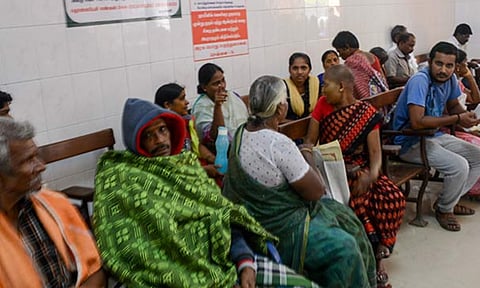
Despite an increase in PHCs and district hospitals, overcrowding remains a persistent challenge. Doctors often see 100 or more patients in a day, leaving barely a few minutes per consultation. This severely compromises communication, rapport, and patient satisfaction.
A disconnect between medical colleges and district health systems further complicates care delivery. Ideally, primary and secondary facilities should handle the majority of illnesses. Instead, patients crowd tertiary medical colleges even for trivial problems. This reinforces the belief that only specialists offer meaningful care, disadvantaging both doctors and patients and deepening distrust in frontline MBBS practitioners.
Loss of the family doctor
Perhaps the most significant loss is the near disappearance of the family doctor from India’s healthcare landscape. Earlier, the GP served as a long-term physician who understood family histories, social contexts, and disease patterns, building trust over years of care.
Countries such as Thailand, Sri Lanka, and Indonesia, as well as developed nations like the UK, Australia, and Canada, have preserved and strengthened family physician models. These systems place trained generalists at the centre of care, ensuring continuity, efficiency, affordability, and trust.
India, by contrast, has widespread “doctor shopping,” driven by cost comparisons and the belief that specialists are inherently superior. This fragmentation severely weakens the doctor–patient relationship.
Misinformation and expectations
Social media has emerged as a powerful — and often harmful — influence. So-called influencers and self-styled health experts frequently spread misinformation, promote unproven remedies, and promise instant cures. Treatment complications are exaggerated, medical errors sensationalised, and anti-doctor sentiment amplified.
Simple ailments are portrayed as potentially life-threatening unless managed by the highest level of expertise. This fosters mistrust in generalists and the belief that every illness requires advanced testing and immediate resolution. Patients now expect instant diagnoses, quick fixes, and zero uncertainty.
The MBBS doctor, trained to work systematically and avoid unnecessary investigations, may appear slow or “inadequate” by these distorted standards. This mismatch between medical reasoning and public expectation breeds dissatisfaction.
Healthcare at a crossroads
India stands at a critical crossroads. While the government speaks of universal healthcare coverage, the system’s basic building block — the basic medical graduate — is steadily losing credibility on the ground. If the MBBS doctor remains undervalued, unappreciated, and mistrusted, no healthcare system, however well-funded, can succeed.
A specialist-driven, corporate-oriented model is financially unsustainable for the common Indian and risks creating inequities similar to those seen in countries like the United States. India must avoid moving in that direction.
Restoring trust in the MBBS doctor is essential. Policymakers, regulators, medical educators, healthcare institutions, and society must work together to reestablish the credibility and centrality of the primary care doctor. Without this, the promise of universal healthcare in India may remain only a promise.
Dr George Mathew is a former professor of surgery & principal of CMC Vellore
