

Truncated pachyderms
Data provided by the Forest Department from its Elephant Death Audit Framework paints a shocking picture regarding the state of these gentle giants in Tamil Nadu.
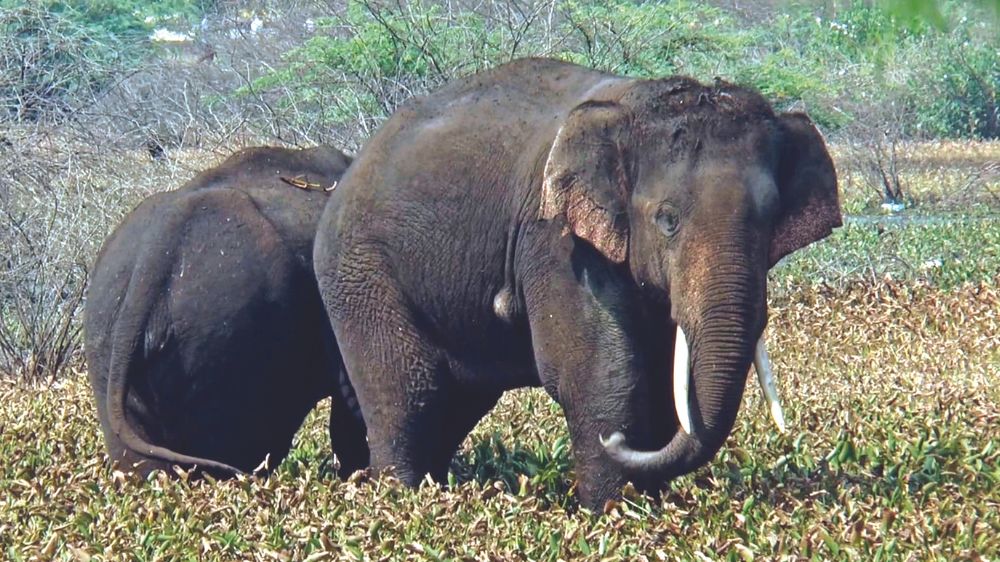
Last month was devastating for elephants across Tamil Nadu. Two elephants, one each in Erode and Krishnagiri districts, died due to electrocution last week. Another jumbo was electrocuted to death at Gudalur in the Nilgiris district last week. Along with the three elephants that succumbed to electric shock in Dharmapuri this March, the tally of jumbos who died due to coming in contact with power infrastructure in western Tamil Nadu so far this year has gone up to six.
Data provided by the Forest Department from its Elephant Death Audit Framework paints a shocking picture regarding the state of these gentle giants in Tamil Nadu. The report tells us that the probability that an elephant in the state would succumb to electrocution is higher than that of the jumbo passing away, due to old age and starvation (put together). It is worth noting that the primary threat to the life of an Asian elephant comes from diseases (802 mortalities), followed by electrocution. Only 1.7% of all mortalities were caused by old age, while 1.6% of deaths were caused by starvation.
The framework specifies the protocol to perform post-mortems and determine the cause of death of elephants, while understanding the scenario in cases of unnatural and preventable deaths. The report says that unnatural causes contributed to more than one in every 10 elephant deaths, of which the primary cause was electrocution. As many as 128 jumbos have been killed by power lines since 2010, with about 76 cases being termed as intentional (those that took place as a result of negative interaction with humans). Other causes include poaching, poisoning, gunshot wounds, and of course, road and rail mishaps. Per the audit, 1,505 elephant deaths were recorded since 2010. Of this, 159 or 10.5% of all mortalities were the result of human-related activities.
Of course, such tragedies are not limited to Tamil Nadu. The last week of November bore witness to three elephants being killed when a goods train hit them while crossing the tracks passing through forests at Rajabhatkhawa in West Bengal’s Alipurduar district. The Rajabhatkhawa-Kalchini section where the accident took place is not covered by the Intrusion Detection System (IDS) meant to avert such collisions. During the same week in Assam, an adult elephant was run over by train, when it had come out of a nearby jungle in search of food. In another incident, again in Assam, a calf that was part of a herd of 40-50 jumbos that had come out of the Gibbon Wildlife Sanctuary while foraging, died after it fell into a deep drain dug by tea garden authorities to erect a fence, in Jorhat.
It’s obvious that a majority of these fatalities are caused by loss of habitat, food and water sources, as well as depletion of reserve forest regions where these animals can roam and forage freely. The increasing episodes of man-animal conflict are a result of encroachments that are being made in protected zones for elephants such as reserve forest areas. Tamil Nadu has already spearheaded deployment of AI-based solutions, consisting of drone networks, collars, sirens, alarms and sensors to safeguard animals from venturing into railway lines. It now needs to pull up its socks with regard to removal of encroachments and offering feasible alternatives to farmers and dwellers whose homes are located in the vicinity of reserve forest regions.