

The Gandhi erasure project
The Gandhi erasure project is not the deed of one day. It’s a multi-faceted, well-oiled stealth programme, 10 years in operation. It was never meant to be a demolition derby but a piece-by-piece take-down of a giant of Indian nationhood.
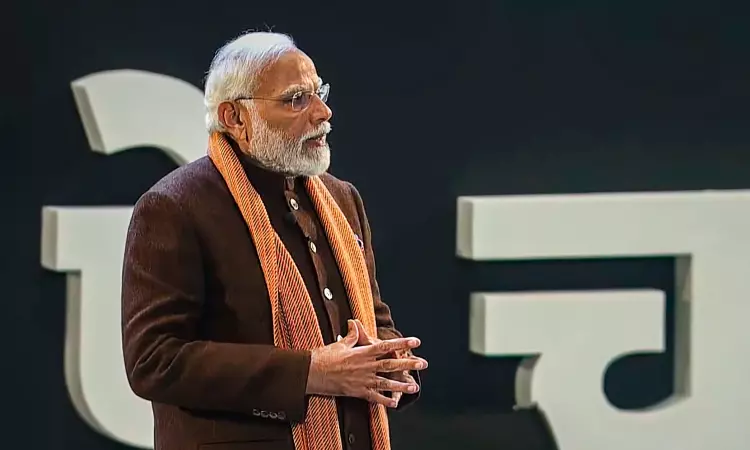
Prime Minister Narendra Modi (PTI)
We arrive at Martyrs’ Day with the Hindu Rashtra project of the Sangh Parivar in high gear. There’s been dark commentary on it after Prime Minister Modi’s liturgy at the new Ram temple in Ayodhya on Jan 22. However, there are still many barriers to overcome before the veil can be thrown off and the true face of the future revealed. Most formidable of those obstacles is the Constitution itself, and its architect, Dr Ambedkar. Then we have the frail figure of the Mahatma, whose assassination by Nathuram Godse this day 76 years ago did not erase his memory from our minds, but only etched it deeper.
If you look closely at today’s commemorative events for signs of dismantling of the Gandhi legacy, it is likely there will be none overt. All the Gandhi things will be done: Rajghat will be visited, and the can’t will be can’ted. The Gandhi erasure project is not the deed of one day. It’s a multi-faceted, well-oiled stealth programme, 10 years in operation. It was never meant to be a demolition derby but a piece-by-piece take-down of a giant of Indian nationhood.
One of the early tactics to invisibilise Gandhi was to denounce his closest adherents, especially Nehru. By taking the blame for Partition, the partial loss of Kashmir and appeasement of Muslims, Nehru served as proxy for Gandhi. Another tactic is to extol contemporaries who took a different path than Gandhi and argue without basis that they were elbowed out of their just share of glory. Subhas Chandra Bose is portrayed as the strong leader who might have given us a more muscle-bound nation than the emaciated entity Gandhi-Nehru left to us. Similarly, Lal Bahadur Shastri is pitched as a spartan saint who shared a birthday with Gandhi but not similar lustre, mainly due to the envious Nehru.
Another dimension of the cancellation of Gandhi is making him a figure of ridicule. This is done by faux critiques of his views on sexuality and celibacy. Analogous to urchins pelting stones at mendicants, WhatsApp is rife with conspiracy scholarship on Gandhi as a British agent, a casteist, or an oddball. Their real purpose is to shake our faith in him as a moral compass and make space for an alternative ideology.
Converse to this strategy of loosening Gandhi’s hold on our national psyche, we have the sneaky design to lionise his assassin. Under-the-radar attempts to depict Godse as a great nationalist, if somewhat misguided, have been made right down the decades. But they have now come out into the open. Books, films, plays, and speeches purporting to take an artistic or scholarly interest in the killer, now openly glorify him as a patriot, even a martyr, who went to the gallows for the sake of the Hindu nation. Moral duplicity allows them to tiptoe around the act of killing and depict it as a deed impelled by an overpowering love for Mother India.
The last aspect of the ‘Gandhi Hatao’ movement is the attempt to erect an alternative hero. This inexorably leads to VD Savarkar after a brief stopover at Bhagat Singh and Subhas Chandra Bose. Savarkar is hailed as a visionary and a revolutionary who advocated a virile brand of Hindu nationalism, as opposed to Gandhi’s effete pacifism. The irony is that Gandhi gave the same name to his dream as those who offer us a more splendid alternative vision than his today: Ram Rajya.