
- Chennai
- Tamil Nadu
- India
- World
- EntertainmentEntertainment
- Business
- Sports
- Lifestyle
- Technology
- Videos
- Explainers
- Editor's Picks

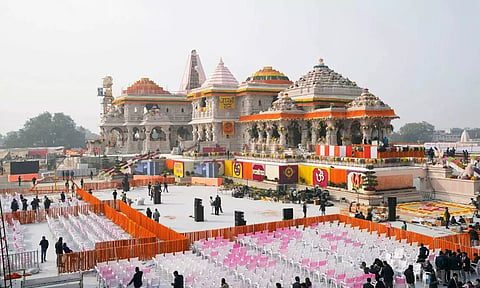
The observance of Republic Day this year has been overshadowed by an event that inspired debates across the political spectrum, and also nudged us into re-evaluating the crux of the Constitution handed down to us. This week, in the aftermath of the Pran Pratishtha ceremony of the Ram Temple in Ayodhya, opposition leaders, celebrities, and commoners posted a picture of the Preamble to the Indian Constitution on social media. It was shared to highlight the fundamental values upon which India was built — as a sovereign socialist secular democratic republic, and to protest against the politicisation of the Ayodhya event.
The ceremony marked a defining moment in the BJP’s trajectory, positioning itself as the dominant force in India’s political landscape. The manner in which the party has aggressively pursued the politics of religious polarisation since its ascendancy to power, came to fruition with the Pran Pratishtha, which will serve as an electoral trump card. Observers pointed out that the event which went by in an incident-free manner would have truly deserved praise, if at all the government had bothered to shower a fraction of such enthusiasm to other religions in the country.
Prior to the event, a political commentator had drawn a distinction between India and Indonesia — on the matter of religious inclusivity. She referred to the province Bali, outside of which Indonesia is a largely non-Hindu and Muslim majority nation. An aspect highlighted was how many facets of Hinduism have seeped into Indonesia’s mainstream culture. Lord Ganesha, who is seen as an icon of wisdom finds a place in the logos of several public universities in the Islamic country. When it comes to the conduct of cultural events across Indonesia’s islands, professional dancers often retell stories from the Mahabharata and the Ramayana. Thousands of pilgrims, both Hindus and Muslims frequently visit the Prambanan temple in Yogyakarta.
Such episodes of peaceful co-existence and inter-religious fraternisation is in short supply in India. Back in 2020, Uttar Pradesh Chief Minister Yogi Adityanath remarked he would not attend the inauguration of the mosque to be built in Ayodhya, which replaces the demolished Babri Masjid. He believed that as ‘a yogi and as a Hindu’, attending roza-iftar with a skullcap did not constitute ‘secularism’.
Defenders of religious resurgence should take notes. In the run-up to the Ayodhya ceremony, right-wing activists in Madhya Pradesh’s Jhabua district, inhabited predominantly by tribal communities, climbed on top of churches and placed saffron flags atop the structures. The state is hotbed of anti-Christian violence, and is governed by the BJP. Later, on the Pran Pratishtha day, 11 persons hoisted saffron flags atop and inside a Mughal-era mosque in Agra.
One might be tempted to dismiss such mischiefs as a one-off or stray incident. But make no mistake, when a State begins siding with a demographic on account of religious affiliation, nefarious elements will take this as a cue to begin demonising everyone else (remember the CAA/NRC protests?). The gruesome murder of Australian missionary Graham Staines and his two sons 25 years ago on January 22, was yet another observance that flew under the radar for most Indians. We can’t even say that we weren’t warned.