

Editorial: What a Messi circus
Messi was shanghaied by politicians, some merely famous celebs, officials and security personnel. Most spectators could not see the superstar at all
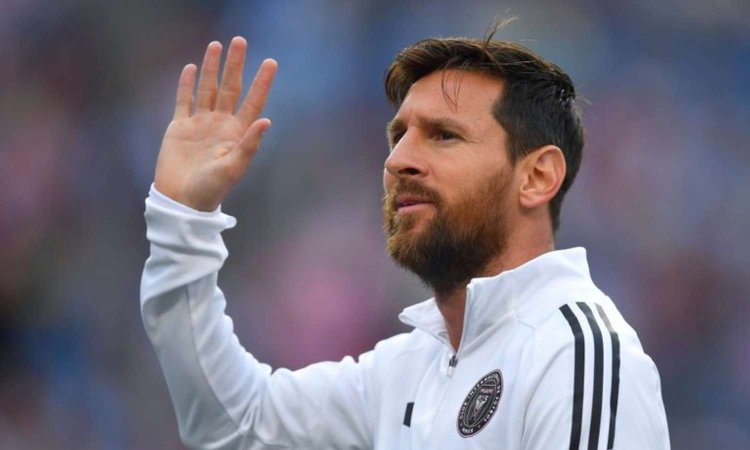
Lionel Messi (PTI)
Lionel Messi’s visit to India over the weekend was supposed to be a celebration of football. What happened instead — chaos in Kolkata and comedy in Hyderabad — was a typical example of how Indian government personalities push and shove to get adjacent to successful stars, elbowing out genuine fans, while doing nothing worthwhile for sport itself.
For the Messi event at Kolkata’s Salt Lake Stadium, tens of thousands of spectators were sold tickets priced from Rs 4,000 to Rs 12,000 with the promise of a victory lap by the footballer, an exhibition match and tips for young players. Many fans travelled long distances for a glimpse of the superstar. What they got instead was a farce. Messi was shanghaied by politicians, some merely famous celebs, officials and security personnel. Most spectators could not see the superstar at all. No wonder they became angry and threw bottles and damaged seats. What was to be an hour-long event was curtailed to 22 minutes.
The Hyderabad leg of the visit was free of crowd trouble but no less ridiculous. Revanth Reddy, the publicity-hungry chief minister of Telangana, tried to make the most of the photo-op, turning up in football shorts and engaging the great footballer in a comical kickabout. A token football clinic for youngsters was peremptorily gone through amid a jostle of society busybodies eager to bask in reflected glory.
This tendency to partake of the juicier parts of sport characterises poseurs in government. In the guise of promoting sport, officials, celebrities and ministers try to steal into the limelight of sports stars. At the Messi events in Kolkata, Hyderabad, Mumbai and New Delhi, some of these personages were willing to shell out up to Rs 9.5 lakh for a photo op with Messi.
While the entire event was clearly a private for-profit affair, government figures freely used official machinery to promote it. In Hyderabad, the programme was held at the Rajiv Gandhi International Stadium, a state-owned venue. For weeks prior, the chief minister posed as an impresario bringing Messi to the state. The police deployed security personnel for crowd control and route management around the venue. State public relations channels amplified the event, highlighting the chief minister’s imminent appearance with the football god.
The obscenity of this spectacle becomes sharper when contrasted with the actual condition of Indian football. India’s men’s national team is currently ranked around 136 in the FIFA rankings, the lowest in a decade. India failed to progress to the AFC Asian Cup in 2027. The Indian Super League, the country’s top domestic competition, has no sponsor, and its future is clouded.
One cannot fault sports stars for monetising their fame and entrepreneurs for trying to profit from it. The organisers of the Messi event engaged the superstar for a hefty sum of money and cannot be excoriated for recovering it through stiff ticket pricing — if the laws permit it and the market affords it. What cannot be excused is government functionaries becoming a party to such exercises using taxpayer-funded facilities with the sole purpose of promoting themselves rather than the sport. It's the government's duty to maintain sporting infrastructure, make it accessible to players at the ground level. Youngsters need no help from the government in becoming inspired by the likes of Messi. Every game they play, every goal they score does that well enough.