
- Chennai
- Tamil Nadu
- India
- World
- EntertainmentEntertainment
- Business
- Sports
- Lifestyle
- Technology
- Videos
- Explainers
- Editor's Picks
Police in Kashmir, Haryana and New Delhi are leaking copious details about their bust of a terror module in Faridabad, which they have creatively christened ‘white-collar terror’ because two or possibly three doctors are allegedly involved in it. The case was guaranteed to grab the headlines on account of that spurious novelty, but also because of the large amount of explosive material allegedly recovered. Further, the possible links, still emerging, between the Faridabad module and the blast near the Red Fort in Delhi on Monday evening make it a sensational case. The fact that all this came to light on the eve of phase two of the election in Bihar gives it great political importance. However, all of this must not obscure the question of why, when so much was known well ahead, the government’s security and intelligence systems failed to intervene before harm was done.
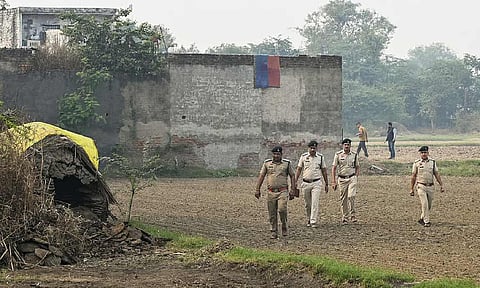
The Kashmir Police first picked up the scent on October 19, when they found Jaish-e-Mohammed posters in Srinagar threatening terror attacks. It led them to the Al Falah hospital in Faridabad, where a professor from Pulwama named Muzammil Ahmad Ganai was discovered to have stored 360 kg of ammonium nitrate-like material in a room he had rented 15 days earlier. Dr Ganai’s arrest and interrogation on Oct. 30 led to the seizure of nearly 3,000 kg of explosive material and weapons at multiple locations and the arrest of a collaborator, another medical professional, in Uttar Pradesh. Police say the link to Monday’s blast is established by the fact that a third doctor, also from Pulwama, was driving the car that blew up mid-traffic near the Red Fort, killing 13 people.
More than the curiosity of doctors getting involved in terrorism, the occurrence of two major terror attacks this year, first the Pahalgam massacre of 27 tourists on April 22 and now the blast at Red Fort, gives us cause for disquiet. While the number of terror incidents in Kashmir, logged by the South Asia Terrorism Portal, has come down this year (145) from the post-2019 peak of 2021, their virulence and their apparent design to trigger dark ramifications are notable. The Pahalgam attack set India on the course to war with Pakistan and thence to major embarrassments in dealings with Donald Trump. The latest attack in the capital, the day before an important election in Bihar, is likely to alter the public discourse in the weeks ahead, even if it has no impact on the outcome of the vote itself in an Assembly election.
Terror incidents before elections are a frequent occurrence, if not common. They give scope for conspiracy theories that terror acts are staged to affect electoral outcomes. Two cases are often cited in support of this. The Spanish election of 2004, held right after terrorists killed 191 people in Madrid, is said to have produced a voter backlash against the ruling party. More famously, in 1996, Hamas attacks on public transportation in Tel Aviv contributed to Benjamin Netanyahu’s upset victory over Shimon Peres in the Israeli election. However, studies on the impact of terror acts on elections in European countries have found no significant changes in voters’ party preference. However, they did produce two important effects: one, an immediate increase in the voting percentage, and two, a switch in the public discourse from bread-and-butter issues like unemployment to national security.
