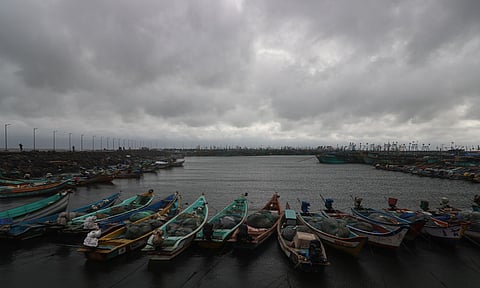

The declaration of a state of emergency in Sri Lanka indicates how devastating the impact of Cyclone Ditwah was on the island nation. It took a heavy human toll. Over 350 people were killed, and many more are missing. According to early estimates, over 20,000 homes were destroyed and more than a lakh displaced took shelter in government-run temporary camps. The priority is to address the disruption in essential services, supply of power, water and food needs. As a goodwill gesture, the Sri Lankan government has relaxed the visa-related rules for those stranded due to the floods. The extreme weather was not limited to Sri Lanka. Thailand, Malaysia, Indonesia and other Asian countries too were subjected to floods and landslides caused by torrential rains. More than a thousand lives were lost. Parts of Tamil Nadu too had their share of woes as incessant rains lashed several coastal districts.
Given its friendship with Sri Lanka and India’s emerging role as the region’s “first responder”, India rushed humanitarian aid and assistance to Sri Lanka. Under Operation Sagar Bandhu, the Indian Air Force pressed into service its heavy lift carrier to rescue several hundred stranded Indian nationals and even foreigners and brought them to Thiruvananthapuram. IAF choppers even airlifted Sri Lankan army personnel from an army camp cut off by landslides and floods. Indian Navy’s INS Vikrant and INS Udaygiri shipped tonnes of dry and fresh rations. To bolster the morale and courage of the neighbouring country, which is the sub-continent's closest maritime neighbour, India announced that it would stand by the people in distress and reaffirmed its unwavering commitment to the Neighbourhood First policy and Indian Ocean Region SAGAR policy which was expanded to a global maritime policy called MAHASAGAR (Mutual and Holistic Advancement for Security and Growth Across Regions).
For some time now, India has been positioning itself as a first responder in Asia and has pitched the idea at a few multilateral summits. For instance, at the recent ASEAN-India summit, Prime Minister Narendra Modi had emphasised how India’s cooperation in Humanitarian Assistance and Disaster Relief (HADR) was growing rapidly. Over the years, it has developed expertise in HADR and shown the world how, at short notice, it has deployed its multidisciplinary National Disaster Response Force and military machinery during the Nepal earthquake or in the cyclone-hit Myanmar, and other regional disasters. Though it helps in projecting India’s soft power, at its core, it remains primarily a humanitarian mission beyond political and other considerations.
However, more needs to be done to consolidate the gains from the past. Firstly, India needs to continue supporting other countries in the recovery and return to normalcy in the medium to long term for any intervention to be impactful and meaningful. This would require material and financial support. Secondly, New Delhi should initiate new confidence- and trust-building engagement so that there is no resistance to India’s humanitarian initiatives. Especially when it comes to civil and military collaboration and data-sharing during rescue and relief operations. Case in point, Bangladesh’s resistance to accepting Indian aid, especially helicopter assistance. Likewise, India has in the past refused foreign aid during large-scale disasters. Lastly, India has considerable meteorological data and accurate forecasting capabilities, which can be shared with other countries through appropriate mechanisms. This advanced information will be critical for planning and preparation, and improving subsequent response and recovery.