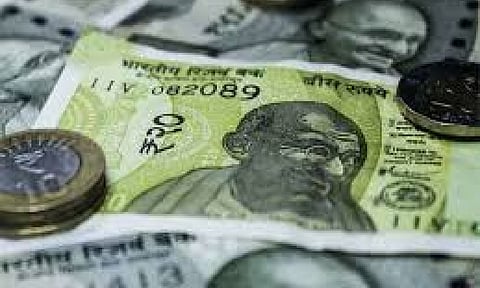

The Indian rupee has crashed through the long-dreaded 90-to-the-dollar barrier at an inopportune time for Prime Minister Narendra Modi. Parliament is in session, and the all-time low plumbed during his watch is adding grist to the mill of the Opposition and supplying cannon fodder to meme makers on social media. His speeches circa 2013, lambasting his predecessor Manmohan Singh for being unable to arrest the slide of the rupee then, are being dredged up again and the movie and sports stars who, at his behest, performed calumnies against the UPA II regime are being barracked. The man who promised to save the rupee is now tipped to escort it to a century.
Whatever spin Modi’s friends in the corporate world are imparting to it, the optics are bad for the PM. The rupee was 58.63 to the dollar on May 20, 2014, the day he took office. On Thursday, Dec. 4, it touched 90.44, a fall of more than 54%. It has weakened 5.3% just this calendar year, becoming the worst-performing Asian currency against the US dollar. The fact that the USD itself is bleeding, having leaked 9.5% of its value against six benchmark currencies this year, should put India’s anaemia in perspective.
Not only does this erosion affect investor confidence in India, but it also gives the lie to the latest GDP growth numbers published by the Modi government last week. The Indian economy ostensibly grew 8.2% in the September quarter, the highest in six quarters and far higher than the Reserve Bank of India forecast of 7%. Not only was a fanciful explanation offered for this — that there was a demand boost due to the GST cut effectuated in the last week of the quarter — the IMF also took the wind out of the government’s sails by questioning its fidelity to statistical norms.
The drift of the rupee during the Modi years has been inexorable. The acceleration we are witnessing this week is due, admittedly, to the slump in exports because of the 50% tariffs imposed by US President Donald Trump. Export of goods reportedly dwindled 12 per cent in October due to this, and the trade deficit has widened to a record Rs 41.7 billion. But equally alarming has been the unrelenting flight of capital since at least the middle of last year. Foreign investors have withdrawn $17 billion from Indian capital markets this year, and foreign direct investment has been no more than a trickle.
The falling rupee is a symptom of the crisis of confidence in the Indian economy. Giving it the spin, as the RBI and the government’s economic advisers are doing, that a weaker currency is actually good for our exports and that its plunge seen this week is actually the result of a clever tactical move by the government to offset the impact of Trump’s tariffs, is at best post-facto prevarication, and possibly just whistling past the graveyard.
The government’s spinmeisters are citing the precedent of how China, Japan, and South Korea in the 1990s and Vietnam more recently allowed their currencies to weaken against the dollar so as to make their exports more competitive. But then those were and are formidable manufacturing economies. The Modi government, on the other hand, has been content to spout Make in India slogans and has, in fact, lapsed back to exporting labour to earn dollars.