
- Chennai
- Tamil Nadu
- India
- World
- EntertainmentEntertainment
- Business
- Sports
- Lifestyle
- Technology
- Videos
- Explainers
- Editor's Picks

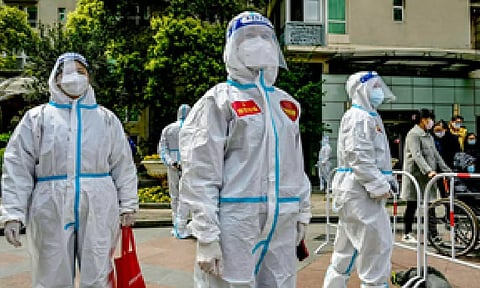
CHENNAI: The spectre of COVID-19 has reappeared in Singapore and Hong Kong, and some cases are being reported in India too. The Indian government is closely monitoring the situation, and top officials have held a review meeting.
Closer home, in Tamil Nadu, the public health department has appealed to people not to panic as the health department is keeping a check on all viruses, including COVID-19, and is fully prepared to deal with any resurgence.
The good news is that the rate of infection is showing a downward trend, and the mortality rate is very low worldwide. Health authorities and medical experts are linking the resurgence to the JN.1 variant that has emerged as a dominant strain worldwide.
Unlike its parent, Omicron, JN.1 can dodge the immune system, and that makes it highly transmissible. On the brighter side, available anti-viral medicines are good enough for their treatment.
Preliminary indications are that the virus is spreading due to waning immunity, and that puts the spotlight on booster shots. This time around, given the past experience, high-risk individuals are being advised to be extra cautious.
Amidst the reassuring news reports about the new wave of infections, the World Health Organisation has announced the adoption of the world’s first pandemic agreement after three years of intensive negotiations.
The WHO got the member states to work out an agreement that makes the response to future pandemics more equitable. The COVID-19 pandemic has exposed the gaps and inequities in the response to the global outbreak.
Among nations, resource-scarce, underdeveloped and developing countries could not match the responses of developed and affluent countries. And, within countries, the socio-economically disadvantaged sections bore the brunt of the punishing pandemic.
They lost lives due to a lack of access to healthcare. The lockdown and other measures robbed them of their already precarious and insecure livelihood, wiped off meagre savings, if any and pushed many families deeper into the quagmire of indebtedness. Even with affirmative action and targeted interventions, it will take a long time to offset the debilitating impact and overcome the setback.
The WHO agreement aims to address this inequity – that is, all countries should have access to vaccines and medicines, and within countries, all sections of society should have equal access to healthcare and assured government support to insulate them from the shocks of pandemic control measures.
Another equally important element of the agreement is the proposal to set up a global mechanism for rapid and timely sharing of “materials and sequence information on pathogens with pandemic potential”.
Put simply, this mechanism would enable equitable and fair distribution of the benefits of research and development into the consequent development of vaccines for prevention, testing kits for diagnosis, and medicines for treatment. This will help in addressing the inequity between nations and within nations.
Eleven countries, including Israel, have abstained, and the Trump administration has withdrawn from the process. As of now, it is a milestone – more like a statement of intent and a wish list regarding equitable access to all the life-saving pandemic-related health products.
Implementing it would depend on the magnanimity of affluent countries and the generosity of big pharmaceutical companies agreeing to share their vaccines and medicines with the poorer countries in exchange for medical and epidemiological data from the latter. The world needs to heed the wake-up call.