
- Chennai
- Tamil Nadu
- India
- World
- EntertainmentEntertainment
- Business
- Sports
- Lifestyle
- Technology
- Videos
- Explainers
- Editor's Picks
A ten-week online brain-training programme helped older adults’ brains function as though they were a decade younger, a recent study has found.
Much like exercise for the body, regular mental workouts can help keep the brain in shape. As we age, processes that support memory, attention, and decision-making can slow down. Keeping the mind active is thought to build a reserve that helps people cope better with these changes.
Studies suggest that those who stay mentally, physically and socially active have a lower risk of dementia. For example, older adults who engage in regular aerobic exercise show larger brain volumes and better cognitive performance than those who are less active, sometimes reversing age-related loss in brain volume.
Research has also found that brain training can enhance cognitive performance in later life. The latest study adds to this evidence by examining whether such programmes can alter brain chemistry itself, offering biological clues about how they might work.
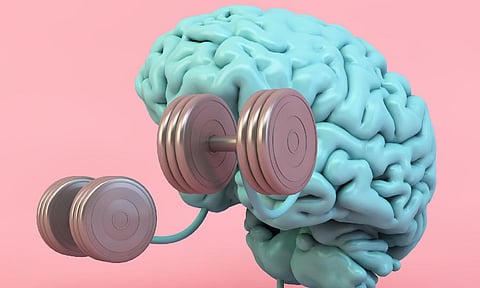
The researchers tested BrainHQ, an app that offers short, game-like exercises to train attention, memory and brain speed. As users improve, the challenges become harder, pushing the brain to adapt — much like adding more weight during a workout.
Ninety-two healthy Canadians aged 65 and over took part. Half completed BrainHQ training for 30 minutes a day, five days a week, over ten weeks. The other half played non-training games such as solitaire for the same amount of time.
Before and after the programme, all participants underwent brain scans to detect subtle chemical changes in brain activity. The researchers focused on the anterior cingulate cortex, a region crucial for attention, learning and memory. Those who completed the speed-based training showed stronger activity in this area compared with those in the comparison group. The shift in brain chemistry was described as equivalent to making their brains ten years younger.
Because reduced activity in this region is linked to cognitive decline and Alzheimer’s disease, strengthening it may help delay or reduce decline and lower dementia risk.
However, the findings should be interpreted cautiously. The study measured many outcomes, and while the training group improved compared with their own baseline, the difference between the groups was not statistically significant. Given the small sample and multiple comparisons, some results may be due to chance.
This was a small study involving healthy, mostly white older adults using one specific app. The results may not apply to people with memory problems, to other types of brain training, or to long-term outcomes. Most effective cognitive-enhancement interventions typically last at least four to six months, suggesting that longer participation may be key to sustained benefits.
Researchers are now testing whether similar programmes can help people showing early signs of dementia. These studies will reveal whether boosting brain activity this way can slow decline in those already affected.
Still, not everyone may be suited to high-intensity digital training. People with existing cognitive concerns may need more community-based, supportive approaches. Cognitive ageing is shaped by many factors — physical activity, social connection, diet and mental wellbeing — so brain training is likely one piece of a broader strategy to help the brain stay younger for longer.
The Conversation
