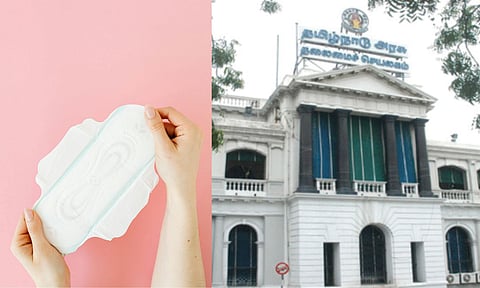

CHENNAI: The government has no proposal to distribute sanitary napkins through ration shops, as such a scheme would cost around Rs 4,000 crore, the State informed the Madras High Court.
The submission was made when the court was hearing a public interest litigation filed by advocate Lakshmi Raja from Tambaram, who said poor women could not buy napkins because of the high cost, while those in rural areas were affected by their non-availability. The petitioner added that these women are, thus, following unhygienic alternative practices.
The importance of providing sanitary napkins could be understood from the Supreme Court's direction to all State governments to distribute them free of cost in schools, the advocate said, adding that the Civic Supplies Department replied to an RTI application that there was no scheme to distribute sanitary napkins free of cost or at subsidised rates through ration shops in Tamil Nadu.
Similarly, the reply from the Health Department referred only to the scheme for providing free sanitary napkins to schoolgirls and made it clear that there was no scheme to distribute napkins through ration shops.
Citing this, the petitioner sought a direction to provide sanitary napkins either free of cost or at subsidised rates through ration shops for the benefit of poor and rural women.
When the case came up for hearing before a division bench comprising Chief Justice Manindra Mohan Shrivastava and G Arul Murugan, Advocate General PS Raman submitted that there was no proposal, as it would involve an expenditure of about Rs 4,000 crore.
However, the State was distributing sanitary napkins free of cost to women in rural areas through village health nurses, and also to schoolgirls and new mothers, he said, claiming that a majority of women were benefiting from these schemes.
But the petitioner objected to the claim, contending that these schemes were not being fully implemented.
After hearing both sides, the judges directed the government and the petitioner to furnish details on the number of women living below the poverty line and the number of economically backward women.
Based on these details, a decision would be taken on whether sanitary napkins should be provided free of cost or supplied under a subsidised scheme. The bench then adjourned the hearing by four weeks.