
Chennai
China’s import ban on scrap plastic has left activists and environmentalists here worried, as it is likely that the waste from the western world could make its way to the sub-continent, Indonesia, Thailand and the Philippines.
With many metros, including Chennai, struggling to implement an effective solid waste management disposal mechanism, the import of scrap plastic, if allowed, will put an immense strain on the recycling infrastructure, which is equipped only to handle domestic production.
Dharmesh Shah, Policy Advisor, Global Alliance for Incinerator Alternatives (GAIA) said the country imports only post-production plastic, leftover from manufacturing industries. “Unlike China, scrap plastic import is banned in our country. But with China’s upcoming ban, the fear is that the law might be amended if the market opens. It is best to keep the plastic waste outside our country and let the western world deal with their plastic consumption, while we find ways to deal with our growing problem of plastic waste,” said the researcher, adding that Chennai is still grappling with ways to deal with its municipal solid waste, with a sizable portion including plastic waste.
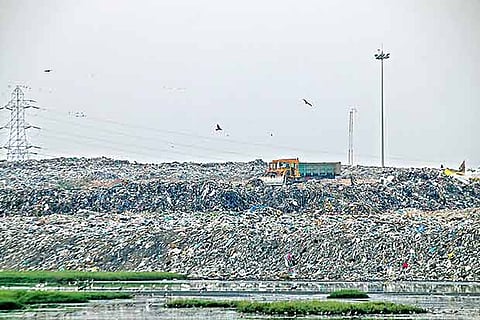
The problem plaguing the country’s plastic recycling industry is that most of it is disposed by illegal units, using unapproved techniques at a high energy and environmental cost. “There is a lot of informal recycling happening here. In Chennai, this is common on the fringes of dumpyards like Kodungaiyur. These informal units are backyard-run businesses, badly executed and highly toxic,” he said.
Shah added that the current recycling infrastructure is equipped to handle local production only. “Most of our local plastic consumption goes into the dump yards, only a fraction gets recycled. To start with, there is no understanding of quantum and nature of plastic waste that we are dealing with. The current recycling infrastructure is enough to recycle what we generate locally. If the country plans to open scrap plastic import, more specialised recycling units which follow best practices should be set up and regulated,” pointed out the policy expert.
GAIA’s report on state of plastics recycling revealed that plastic recycling rates have a low ceiling. “Most plastic resins are not economically or technically viable to recycle. Low oil and gas prices make virgin plastic cheap, which severely undermines recycling markets,” stated the report.
“Recycling is a myth, an industry narrative that portrays plastic as a miracle material, which can be recycled for other materials. That is not true as virgin plastic is added to recycled plastic to make new objects, which don’t last long. Most plastic waste – like chips packets and tetrapacks – cannot be recycled. The only way to deal with plastic waste is to stop generating it in the first place,” said Satyarupa Sekhar, Director, Government Outreach and Advocacy, Citizen Consumer and Civic Action Group (CAG).
This is not the first time that business has boomed around dealing with hazardous material. “There is no successful recycling model. For urban-local bodies, the way out is by incinerating plastic, which means breathing more toxic area,” she added.
RECYCLING: NOT A PLEASANT PICTURE
GLOBAL SCENARIO:
INDIA’S PLASTIC RECYCLING INDUSTRY:
LAWS:
CHENNAI’S VIEW:
RECYCLING INFRASTRUCTURE:
BUSINESS CHALLENGES:
Visit news.dtnext.in to explore our interactive epaper!
Download the DT Next app for more exciting features!
Click here for iOS
Click here for Android