
Chennai
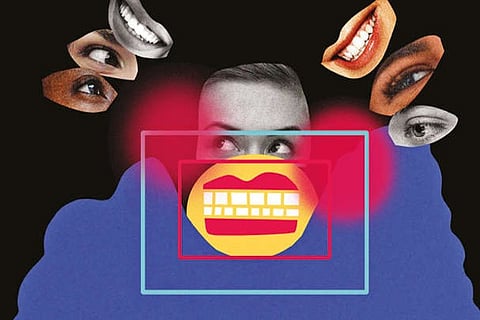
Royalists on Twitter have invoked Piers Morgan’s sneering term for Prince Harry and Meghan Markle — “Ginge and Cringe” — after the Oprah interview. A forum devoted to cringe content has millions of followers on Reddit. Headline writers from the traditional news media toss the word around with abandon. Cringe is a verb, adjective and noun (the latter of which, for example, is used in the viral meme “Bro! You Just Posted Cringe!”). The word is everywhere.
And no wonder. As Merriam-Webster defines it, to cringe means either to recoil in fear or to show embarrassment or disgust — all appropriate responses, perhaps, with both sides in the country’s political and cultural divide regarding each other with increasing horror; shameless self-promotion on social media running at peak levels; and swaths of the population continuously redefining “appropriate” as part of a larger reappraisal of our cultural past.
Cringe is nothing if not versatile. As a word of judgment, it works in a playful context (as when Vogue catalogues “cringe-watch” favourites such as “Indian Matchmaking”) as well as a serious one (say, to shame maskless spring breakers flooding Florida beaches). As a word that implicitly delineates between the clued-in and the clueless, cringe also proves handy for those looking to advertise a superior moral or aesthetic refinement. Among the Gen Z types of TikTok who unearth videos of lead-footed dancers and weepy bedroom balladeers, a mix of crowdsourced arts criticism and cyberbullying has emerged, which Vox recently dubbed “Cringe TikTok.” Cringe also works well to convey youth’s eternal scorn for those on the north side of 40. BuzzFeed, for instance, runs listicles on the cringiest dad jokes. Millennials often use the term as a wrist slap of predigital natives when they indulge in tone-deaf jokes or political opinions that never should have made it out of the 1980s. So-called “cringe comedy” — mining social awkwardness for laughs — has reigned on television for years, at least since “Seinfeld.”
But the use of the term has exploded in recent years, according to a Google Trends chart of the word’s appearance in searches since 2004, first nudging upward in 2012 (coincidentally or not, the same year that the cringe emoji, or grimacing face, debuted), then going full hockey stick in July 2016 (coincidentally or not, the month that Donald Trump took the nomination at the Republican National Convention). Given the political turbulence roiling the nation, the cringefest of recent years calls to mind the concept of “cultural cringe,” coined by Australian literary critic A.A. Phillips in the 1950s and often interpreted to mean an inferiority complex on the part of an entire nation.
But maybe the spread of “cringe” in 21st-century America is not a sign of a culture in a death spiral, but something more healing. In recent weeks, the news media has invoked the term to describe the exploitation of Britney Spears and Lindsay Lohan two decades ago as well as the fat-shaming jokes on “Friends” and transphobic wisecracks on “Sex and the City.” As “cringe” implies, we may recoil at the uglier parts of our past. But as it also implies, at least we recognize them as such.
Alex Williams is a reporter with NYT©2021
The New York Times
Visit news.dtnext.in to explore our interactive epaper!
Download the DT Next app for more exciting features!
Click here for iOS
Click here for Android