
- Chennai
- Tamil Nadu
- India
- World
- EntertainmentEntertainment
- Business
- Sports
- Lifestyle
- Technology
- Videos
- Explainers
- Editor's Picks
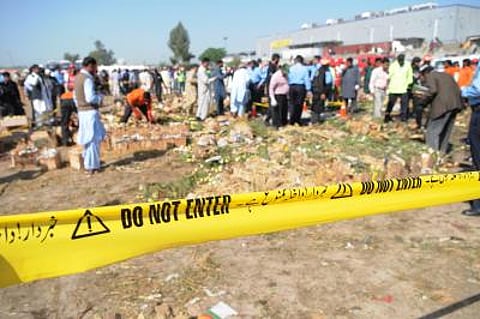
NEW DELHI: The recent bombing at a mosque in Islamabad by the Islamic State Khorasan Province (ISKP) clearly shows that the terror outfit has exploited the failing security mechanism in Pakistan.
The ISKP was quiet when it came to operations in Pakistan for almost a year.
The last attack that the ISKP claimed responsibility for was at Balochistan's Mastung on April 15, 2025, when a bus carrying personnel of the Pakistani security forces was targeted, resulting in the death of three.
Security analysts say that the ISKP has been carrying out attacks in Pakistan since 2015. However, until 2022, the attacks were fewer, and there were years when just one strike was claimed by the ISKP.
However, the number of attacks went up considerably after 2022 and in all, there have been 90 attacks of various natures claimed by the ISKP since then.
2021 was the year that the ISKP gradually began moving major operations out of Afghanistan and setting up a base in Pakistan, which it has openly called "an enemy nation" and "an un-Islamic state".
The ISKP has sought to establish an Islamic state in Pakistan and hence wants the establishment out.
The Islamabad Mosque attack, which took place last week, was timed with the Balochistan Liberation Army (BLA) launching 'Operation Hero 2.0' against the Pakistan security forces.
The vacuum in the security mechanism, as the focus was largely on Balochistan, was capitalised upon by the ISKP. It chose the exact time to strike at Islamabad as security was lax, officials say.
An Intelligence Bureau official said that apart from the timing of the attack, the ISKP also sought to send out a loud message to the United States.
Pakistan has been boasting about its newfound friendship with the US, and this has not gone down too well with the ISKP.
In January this year, the US began air strikes against the Islamic State in Syria and Africa. The Islamic State in Africa, in particular, has suffered significant losses in the air strikes. The Islamabad bombings were also a way of sending a loud message to the US in a bid to reassert its power, the official said.
Officials also say that they notice a change in the pattern of the attacks. Earlier, they stuck largely to areas in and around Balochistan. Now, they have come to the mainland and have struck at Islamabad, Karachi, among others.
The recent attacks have been high-impact ones, which bear the signature of the Islamic State.
Basically, the ISKP has taken complete advantage of the breakdown in security in Pakistan owing to the rise of the Balochis and also the breakdown of the ceasefire with the Tehreek-e-Taliban Pakistan (TTP). Its larger plan is to strengthen itself to such an extent that it can take on the Taliban in Afghanistan. It also intends to weaken Pakistan to such an extent that it would want to control the country.
