
- Chennai
- Tamil Nadu
- India
- World
- EntertainmentEntertainment
- Business
- Sports
- Lifestyle
- Technology
- Videos
- Explainers
- Editor's Picks
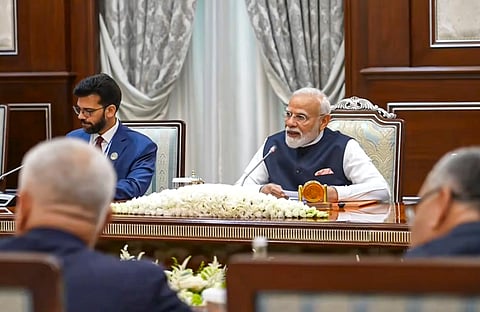
TASHKENT: India and Uzbekistan on Sunday decided to elevate their ties to a comprehensive strategic partnership and agreed to establish a framework for long-term supply of Uranium following talks between Prime Minister Narendra Modi and Uzbek President Shavkat Mirziyoyev.
The talks focused on expanding cooperation in areas of trade, investment, infrastructure, critical minerals, mining, defence and security, agriculture, pharmaceuticals, health, information technology, digital public infrastructure including UPI and education.
The two sides also set a target of USD 5 billion in annual bilateral trade by 2030, according to the Ministry of External Affairs (MEA). The current volume of bilateral trade between the two nations is over USD 1 billion.
The two sides decided to elevate the bilateral ties to a Comprehensive Strategic Partnership, reflecting the growing depth and expanding scope of cooperation, it said.
Both leaders witnessed the exchange of several agreements covering a wide range of areas, including mining, culture, education, tourism, ayurveda, among others.
A Letter of Intent for the restoration and conservation of the Buddhist sites of Fayaz Tepa and Kara Tepa in Uzbekistan was also agreed upon.
Modi landed in Tashkent on Saturday on a two-day visit to bolster ties with Uzbekistan in a range of areas including clean energy.
New Delhi has been looking at procuring Uranium from Uzbekistan to produce nuclear energy for civilian purposes.
“We are celebrating the 15th anniversary of our strategic partnership. I am delighted that, on this special occasion, we are elevating our ties to the level of a Comprehensive Strategic Partnership,” Modi said in his opening remarks at the bilateral talks.
“We will move forward by setting concrete goals within this framework,” he said in Hindi.
The prime minister also made a mention of the “productive talks” he had with the Uzbek president over dinner last night.
“We had a productive discussion over dinner last night and took several important decisions.”
“We will establish a Coordination Council at the level of foreign ministers to provide direction to all aspects of our cooperation through close coordination,” Modi said.
The prime minister said both sides will also elevate their existing joint commission from the level of secretaries to that of ministerial level.
“Both sides will jointly organise a business summit featuring business leaders from both nations.”
“We will also establish a long-term arrangement for the supply of uranium,” he said.
