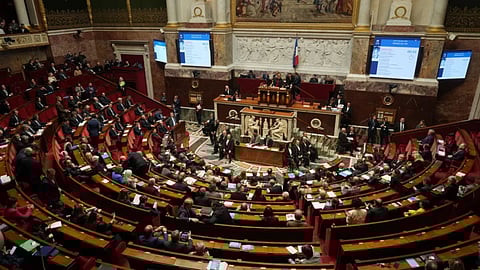

PARIS: France's fractured parliament is debating an emergency bill on Tuesday designed to prevent a US-style government shutdown next week, after negotiations on a 2026 budget collapsed.
With just days left before the new year, President Emmanuel Macron and his Cabinet met on Monday night to present the brief draft law. It aims to ensure the continuity of national life and the functioning of public services, including collecting taxes and disbursing them to local authorities based on tax and spending levels in the 2025 budget, the Cabinet said.
Lawmakers in the National Assembly, the French parliament's powerful lower house, made several amendments to the bill and are expected to vote on it late Tuesday, followed by the Senate. It is likely to pass despite deep divisions among the assembly's three main camps Marine Le Pen's far-right National Rally, left-wing forces and Macron's centrist minority government.
The next step will be harder: building a real budget for 2026, and averting a new political crisis.
Macron is desperate to bring down the huge deficit to 5 per cent and bring back investor confidence in France's economy after protracted political deadlock and turmoil prompted by his ill-fated decision to call snap elections last year.
“We need a budget as fast as possible so that we can move on,” Finance Minister Roland Lescure said on Tuesday on BFM television. “The longer (the temporary budget) lasts, the more it costs.”
France has a high level of public spending driven by generous social welfare programs, health care and education, and a heavy tax burden that falls short of covering the costs.
Prime Minister Sebastien Lecornu, who resigned and was then reappointed this fall, is expected to make a public address later Tuesday about the budget situation.
Lecornu's minority government won relief earlier this month when parliament narrowly approved a key health care budget bill, but at the cost of suspending Macron's flagship pension reform meant to raise the retirement age from 62 to 64.