
- Chennai
- Tamil Nadu
- India
- World
- EntertainmentEntertainment
- Business
- Sports
- Lifestyle
- Technology
- Videos
- Explainers
- Editor's Picks
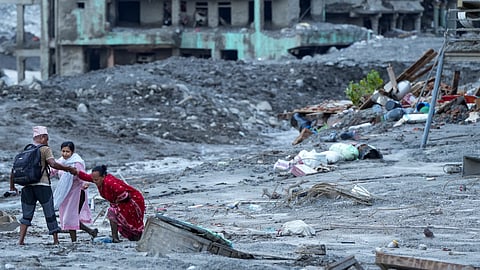
KATHMANDU: The death toll from flash floods in Nepal rose to 903 on Monday, with bodies continuing to be recovered, while 4,247 people are still missing following the disaster, authorities said.
So far, 272 bodies have been recovered from Chitwan, 207 from Nawalparasi East, 151 from Nawalparasi West and 62 from Gorkha districts, the National Disaster Risk Reduction and Management Authority (NDRRMA) said.
Similarly, 95 bodies have been recovered from Nuwakot, 55 from Dhading, 37 from Tanahu and 24 from Rasuwa.
The disaster authority said 4,247 people are also missing, including 99 security personnel and 591 foreigners.

The flash floods, believed to have been triggered by a collapse or avalanche of ice and rock near the Nepal-Tibet border, devastated towns and villages in northern and central Nepal on August 26.
The Bhotekoshi River, which flows south from the Himalayan border region, carried the floodwaters downstream, sweeping away homes, vehicles, roads and bridges and damaging hydropower projects.
It killed 16 people on the Chinese side as well, while nearly 550 people remain missing in Tibet, according to Chinese media reports.
The floods also washed away the Bhotekoshi Corridor, Nepal's main land trade link with China as well as the Rasuwagadhi border crossing connecting the two nations.
In a statement issued on Sunday, the NDRRMA warned that water levels in the Bhotekoshi River had risen again.
Nearly 9,500 people were rescued from flood-affected areas till Sunday evening, which includes locals and tourists from multiple countries, including India, the US, China, Russia, the UK, Spain, Belgium, Germany, Italy, Malta, Turkiye, Switzerland and Portugal, officials said.
In Nepal’s hospitals, which have been witnessing major crowds of people looking for their missing relatives, the focus is increasingly shifting towards identifying the dead.
Photographs have been pasted outside hospital walls, where huge gatherings could be seen scanning them with attention.
Nepal’s Foreign Secretary Amrit Bahadur Rai said in a press briefing on Sunday that the mortal remains of victims who could not be identified, including those that were unrecognisable, amputated or decomposed due to prolonged exposure to water, had been buried following “standard and accepted protocols”.
He also said that an 18-member team of forensic experts from India specialising in DNA analysis had arrived in Nepal and that coordination between the two countries was continuing.