
- Chennai
- Tamil Nadu
- India
- World
- EntertainmentEntertainment
- Business
- Sports
- Lifestyle
- Technology
- Videos
- Explainers
- Editor's Picks
KATHMANDU: Nepal's meteorology department on Saturday warned of fresh rainfall and thunderstorms in the country's flash flood-affected areas, threatening to disrupt ongoing rescue and relief operations amid the worsening crisis, according to a media report.
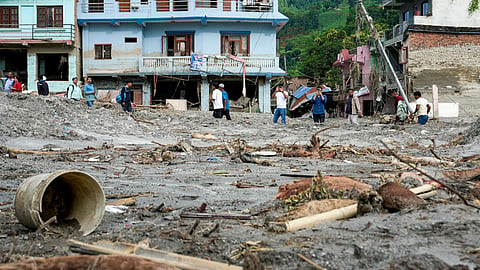
An ice-rock avalanche following a glacial collapse near the Nepal-Tibet border sent a torrent of water, mud and debris downstream through central Nepal on Wednesday.
The death toll crossed 600 on Saturday, while more than 2,400 people remained missing. Nearly 2,500 people, including 163 foreigners, were evacuated as rescue teams raced against time amid on-and-off rainfall in the flood-affected regions.
More than 11,000 security personnel, including over 5,000 Nepal Army personnel, have been mobilised for search and rescue operations.
The Department of Hydrology and Meteorology has indicated heavy rain in the hilly and mountainous regions of Koshi, Bagmati, and Gandaki provinces, the hilly areas of Karnali, and the Terai regions of Lumbini and Sudurpashchim provinces, The Rising Nepal media portal said.
Meteorologist Hari Prasad Dahal said most places in the Bhotekoshi flood-affected area in Rasuwa are likely to receive moderate rainfall on Saturday. “Heavy rain may occur in one or two places, which is likely to affect search and rescue operations. Therefore, precaution is necessary,” he added.
The meteorology department also indicated a possibility of moderate rainfall with thunder and lightning as well as snowfall in many places in the country’s hilly and mountainous regions from Saturday afternoon.
The regions of Koshi, Bagmati and Gandaki provinces, along with some other hilly and mountainous areas, may experience rainfall with thunder and lightning as well as snow, it said.
Rescuers continued search operations amid fears of another wave of flooding, following an increase in water levels in Bhotekoshi River.
Also, Chinese authorities have already warned about a new barrier lake forming near the river's source in Tibet and alerted that the lake could breach, adding to risks of fresh floods in downstream areas in Nepal.
