
- Chennai
- Tamil Nadu
- India
- World
- EntertainmentEntertainment
- Business
- Sports
- Lifestyle
- Technology
- Videos
- Explainers
- Editor's Picks

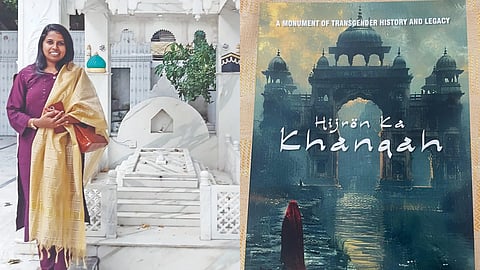
MADURAI: What prompted Madurai-based writer Mahalakshmi Raghavan (32) to travel to South Delhi in search of Hijron Ka Khanqah? Why does this little-known place matter to Tamil Nadu's transgender community?
The answer lies in a history that predates the British Criminal Tribes Act of 1871, which subjected hijra communities to criminalisation, surveillance and stigma.
Hijron Ka Khanqah, an ancient monument in South Delhi, houses 50 tombs commemorating Soddo Mai, a 15th Century transgender spiritual leader during the reign of the Lodi dynasty, and her 49 disciples. The monument stands as a testament to the spiritual and cultural significance once accorded to transgender communities in India, says Mahalakshmi.
In the recently released book titled, Hijron Ka Khanqah: A Monument of Transgender History and Legacy, Mahalakshmi sheds light on the forgotten contributions of trans persons to India’s history, and challenges the contemporary narratives that have often relegated transgender people to the margins of society.
Born into a Hindu family, Soddo Mai was identified as male by those around her. However, from an early age, she recognised her identity as a woman and observed the lives of trans women around her. “While many trans people during that period were drawn to Bhadai, an ancient dance form, Soddo Mai found solace in her spiritual quest through the teachings of Sufi saint, Khwaja Qutbuddin Bakhtiar Kaki,” said Mahalakshmi, secretary, Madurai-based Transgender Resource Centre (TRC).
Acknowledging her devotion, the Sufi saint affectionately called her ‘Abba’, meaning elder sister. “As Soddo Mai became deeply immersed in the teachings of the Sufi saint, she embraced Islam as an extension of her spiritual journey, rather than rejecting her Hindu upbringing,” said Mahalakshmi.
The turning point in Soddo Mai’s spiritual quest came with her long journey to Mecca with her 49 trans women disciples, which, according to the author, transformed her life. “Seeing the suffering of people around her in the city, Soddo Mai bequeathed all her land around Mehrauli to the poor and needy. This sent shock-waves through the community,” said the author.
From then on, Soddo Mai dedicated her life to feeding the hungry and offering solace to the downtrodden. Her 49 trans women disciples carried on her work, ensuring that people in their community did not go hungry or remain without shelter. “After she passed away, the King of the Lodi dynasty recognised her service to humanity and installed a magnificent marble tomb at Hijron Ka Khanqah in Mehrauli, where she was laid to rest,” she added. “Her 49 disciples, who had served her faithfully, were buried around her.”
Today, the sacred site is a place of pilgrimage for people from across the world, including members of the transgender community, who visit to offer prayers and seek Soddo Mai’s blessings. Offering food and other items to the poor continues to be one of the main rituals at Hijron Ka Khanqah.
Priya Babu, an accomplished trans woman activist and managing trustee of TRC, who encouraged the author to write the book, said it disproves the widely held belief that the concept of a third gender is a Western notion that India borrowed from the West. “Through this book, we demonstrate that trans people have contributed significantly to shaping our history and that, in the pre-colonial period, they held positions of influence and respect,” she said.
To write the book, Mahalakshmi drew largely on secondary literature and oral histories, including conversations with several trans persons who visit Hijron Ka Khanqah as a place of spiritual refuge and cultural reaffirmation. She also spoke to the caretaker, Shiri, whose family has been looking after the monument for four generations.