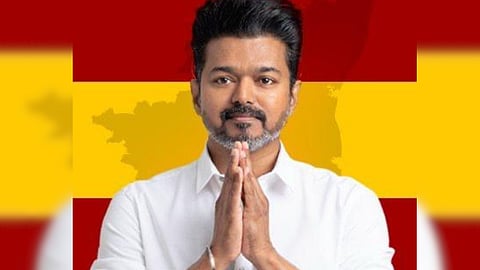

CHENNAI: As people across Tamil Nadu celebrated Thai Pongal with traditional fervour, a festive greeting from actor-turned-politician Vijay has unexpectedly reignited a long-standing ideological and cultural debate in the state — when exactly is the Tamil New Year?
In a post on X, Vijay extended his Pongal wishes to Tamils across the world, saying: "On the auspicious occasion of Thai Pongal, the festival of Tamils, may love and peace fill the lives of Tamil families everywhere, and may health and prosperity prevail."
What drew political and cultural attention, however, was the closing line of his message, where Vijay also wished people a "successful Pongal and happy Tamil New Year".
The reference to Tamil New Year greetings alongside Pongal has now become the centre of an intense public discussion. The debate over the Tamil New Year date is not new. For decades, Tamil Nadu has seen two contrasting viewpoints.
Traditionally, many Tamils have celebrated Chithirai 1 (mid-April) as the Tamil New Year. However, from the early 20th century, several Tamil scholars and rationalist thinkers argued that Thai 1 — the first day of the Thai month — should be recognised as the true Tamil New Year, rooted in agrarian life and ancient Tamil traditions.
In 1921, more than 500 Tamil scholars, led by noted scholar Maraimalai Adigal, passed a resolution declaring "Thai Mudhal Naal" (Thai 1) as the Tamil New Year. Acting on this ideological foundation, the DMK government under M Karunanidhi legally declared Thai 1 as Tamil New Year in 2008.
However, the decision was reversed in 2011 as the AIADMK government led by J Jayalalithaa restored Chithirai 1 as the official Tamil New Year. Vijay’s Pongal greeting is particularly significant as it marks his first Pongal after formally launching his political party.
Through his party ideology, songs, and public messaging, Vijay has positioned himself as a blend of Tamil nationalism and Dravidian thought. By implicitly acknowledging Thai 1 as the Tamil New Year, he appears to align with the ideological position long advocated by Tamil scholars and Dravidian movements.
While the present DMK government has not reinstated an official government order recognising Thai 1 as Tamil New Year, Vijay’s public greeting has triggered sharp reactions. Supporters hail it as a return to ancient Tamil cultural roots, while critics argue that generations of Tamils continue to observe Chithirai 1 as the New Year.
As opinions continue to pour in, Vijay’s festive message has once again demonstrated how cultural symbolism and politics remain deeply intertwined in Tamil Nadu.