
- Chennai
- Tamil Nadu
- India
- World
- EntertainmentEntertainment
- Business
- Sports
- Lifestyle
- Technology
- Videos
- Explainers
- Editor's Picks

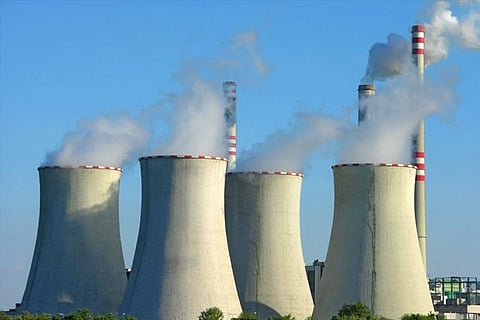
CHENNAI: Tamil Nadu Generation and Distribution Corporation Ltd (TNPGCL) has approved a proposal to increase the capacity of the Stage II and III projects at Udangudi from 2,640 MW to 3,200 MW, with two 800 MW coal-based supercritical thermal power units planned under each stage. Completing the proposed projects could take 6-7 years, Electricity Minister R Nirmalkumar said.
According to proceedings issued by TNPGCL on October 12, the board has approved the capacity revision from the earlier plan of two 660 MW units each in Stage II and Stage III to two 800 MW units in each stage.
The projects will be implemented under the public-private partnership (PPP) mode, with tenders to be floated accordingly. With this announcement, the ongoing Ennore SEZ and Udangudi Stage I would be the last power projects executed by the utility itself. The government has already announced execution of the stalled 2X800 MW Uppur and 660 MW Ennore Expansion project through the PPP model.
The expansion comes as the first unit of the 2x660 MW Udangudi Stage I thermal power project commenced commercial operation in the first week of September. The second unit is expected to begin trial operations by the end of this year.
The corporation will seek administrative approval from the state government for the capacity revision. The board has also approved the appointment of a consultant through TN Infrastructure Development Board (TNIDB) for preparatory and implementation-related works.
The consultancy will prepare the Detailed Feasibility Report (DFR) and Detailed Project Report (DPR), conduct surveys and investigations, obtain statutory clearances, prepare tender specifications, invite bids, analyse bids and facilitate contract awards and post-award activities. Its scope will cover the expansion of the existing Udangudi Stage I project with an additional 800 MW unit as well as the 1,600 MW planned under each of Stages II and III through the tariff-based competitive bidding (TBCB) route.
Defending the additional expenditure on power procurement, the minister explained, “The government has decided to meet electricity demand rather than impose power cuts. Outages lasting even a few hours could cause substantial losses to industries, commercial establishments and other consumers. The government is spending an additional Rs 5-7 crore a day on power purchases to avoid potentially much larger economic losses caused by outages.”
On demands from industries to procure electricity directly through open access, Nirmalkumar said that several cases involving open access and wheeling charges were pending before courts, including the Supreme Court. “The government cannot grant commercial permission until the legal and tariff-related issues are resolved,” he said. “Consultations have been held with industry representatives, and further action will follow after the pending issues are settled.”