
- Chennai
- Election-2026Election-2026
- Tamil Nadu
- National
- World
- Cinema
- Business
- Sports
- Lifestyle
- Technology
- Videos
- Explainers
Chennai
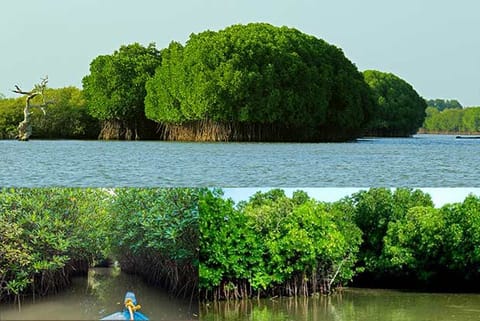
The wetlands in Pichvaram and Muthupet have lost five species of mangrove trees over seven decades as the water-starved state finds itself unable to release fresh water into the seas. Moreover, efforts to re-introduce the trees into the area have not been successful, claimed researchers.
Mangroves are salt-tolerant trees that grow in wetlands near the coast and are our first line of defence against coastal storms. These trees, however, depend on a delicate balance of fresh water from rivers and sea water. Any imbalance can affect the 14 different species of trees and in return, have an impact on the ecosystem as a large number of marine animals depend on the mangrove wetlands for food. This would also have an effect on communities who earn a living by fishing from these areas.
Researchers from MS Swaminathan Research Foundation (MSSRF), who have been working extensively with mangroves for decades, have found that with shortage of water in the state, the administration tries to make the best use of the available stock of fresh water and thus, prevent it from flowing into the sea. Without the supply of fresh water, salinity of the coastal wetlands increases to a point that even the salt-tolerant mangrove trees cannot survive in it.
Dr V Selvam, the lead researcher who is looking into the depletion of mangrove cover in Tamil Nadu, said, that there are two varieties of mangroves: the hard-wood low saline species and the softer wood variety that can withstand higher salinity. “Over the last 70 years, the increasing salinity levels in the area have pushed tree species such as Xylocarpus granatum, Sonneratia apetala, Kandelia candel, Cynometra Irripa and Bruguiera gymnorhiza into local extinction, while other low saline species are disappearing gradually,” said Selvam.
Speaking about their efforts to re-introduce the five species in the wetlands, the researcher said, “We collected about 200 seedlings of each of these species from West Bengal, Odisha and the Andaman islands, and planted them in Pichavaram. But, they survived for two to three years before succumbing to high salinity.”
He added that any further attempts too might prove futile unless there is an increase in the flow of fresh water. “Unless the fresh water is allowed to flow into the sea, the salinity level is likely to increase,” Selvam said.
Genetic research centre formangroves on the cards
MSSRF is also working on opening a genetic research centre where live species of mangroves from across the country will stored and examined. “Studying them, especially the species that are losing out because of increasing soil salinity, we can try and figure out ways to make them more salt tolerant and attempt to introduce them in our wetlands again,” said Selvam. Build with approximatelyRs 30 lakh, the centre is supposed become operational by the end of the year.
High salt-tolerant species spread rapidly across wetlands
Meanwhile, the population of species that can tolerate high salinity is increasing in the wetlands. These trees, however, are weak in structure and vulnerable to high velocity winds. They not only fail to defend the coastal ecosystem from storms, but also affect the biodiversity in the region. “Now, Avicennia Marina, one of the high-salinity tolerant softwood trees, has become dominant and has spread rapidly in the area.”
Dr K Baranidharan, an assistant professor in Forest College and Research Institute in Mettupalayam, Coimbatore, who has been looking into the degradation of mangroves in Muthupet and Pichavaram for about three years, said that during high tide, sea water enters the estuaries that feed the wetlands and during low tide, the water remains back in these waterbodies. With decreasing amount of fresh water from Cauvery and its distributaries to mix with the sea water in these estuaries, the salinity levels of the soil here continue to increase. “We have to restore the estuaries in mangrove areas to restore the balance,” said Baranidharan. “Also, we need to have coastal development programmes and educate more communities about the importance of mangroves to ensure that the remaining trees are not destroyed,” he said.
A lengthy dry season also aggravates the problem. Both Pichavaram and Muthupet mangroves receive fresh water mostly during the North East monsoon season between October and November. Thus, the wetlands have to withstand high salinity conditions for about 10 months, affecting the area’s flora and fauna.
Pichavaram wetland is located on a delta of Cauvery and is fed by river Coleroon while six distributaries of Cauvery discharge their water into a lagoon feeding the Muthupet wetlands with fresh water before reaching the sea. “Hence, any developmental activities such as building of dams upstream of these rivers further reduce the flow of fresh water into the wetlands,” said Selvam.
The area has also seen qualitative degradation. “Earlier, we used to receive some amount of rainfall from the South West monsoon, but now with only two months of rain, human interference and climate change, the entire ecosystem of the area has degraded,” the researcher from MSSRF said.
How are other organisms dependant on mangroves?
Mangroves, with their network of unique roots, provide a haven for marine animals to live and breed while mangrove detritus, i.e. fallen and decomposing leaves of the trees act as food for different varieties of crab and fish. People in coastal communities use these wetlands to catch and rear prawns, crabs and fish.
Why are mangroves important?
Dr K Baranidharan, an assistant professor in Forest College and Research Institute in Mettupalayam, Coimbatore, said that mangroves act as a natural barrier against tsunamis and cyclones and thus, losing the hardier variety of them may prove disastrous for the coastal communities. “Mangroves act as bio shields. During the tsunami in 2004, the villages surrounded by mangroves near Pichavaram escaped almost unhurt while other coastal villages suffered extensive damage. The casualties in one of them touched 40,” said Baranidharan.
Visit news.dtnext.in to explore our interactive epaper!
Download the DT Next app for more exciting features!
Click here for iOS
Click here for Android