
- Chennai
- Tamil Nadu
- India
- World
- EntertainmentEntertainment
- Business
- Sports
- Lifestyle
- Technology
- Videos
- Explainers
- Editor's Picks

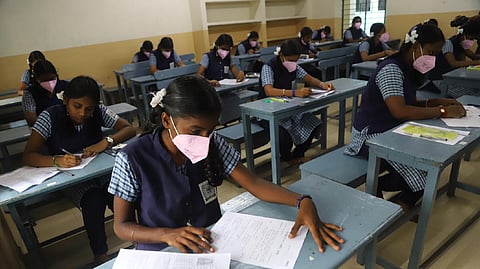
CHENNAI: The Directorate of Government Examination has implemented a slew of measures to ensure the protocols are strictly adhered to in the conduct of this academic year's board exams and to tighten the loopholes. Most of these steps were taken for the first time to make the examination process student-friendly.
The board exams for Classes 10 and 12 are considered critical given their significance while pursuing collegiate education. This year's board exam has just wrapped up, and results are expected in the first week of May. The results of these exams and students' performance often become a point of discussion and debate.
The DGE has set a precedent this year by introducing steps at every level, from curbing malpractices and invigilation to evaluation, thus tying up the loose ends.
Among the new measures, specifically to reduce malpractices, was the directive for the invigilators to procure signatures from at least two students while both opening and closing the question paper packet. They were also ordered to seal the question paper packet promptly after distribution and the answer sheet packet after collection, in front of the students, to prevent any additional question papers reaching third parties or fraudsters and loose packets being carried out of the exam hall.
"We directed invigilators to seal balance question papers after distribution and answer sheets immediately after collection, so that both cannot be handled by anyone, except sanctioned persons. Oftentimes, malpractices begin here," said a department official.
For the first time, the DGE has multiple packets of different numbers of question papers, so that additional question papers are not leaked outside.
Also, the Directorate has strictly urged all invigilators (teachers) and the chief of exams to submit their mobile phones with a written declaration before the commencement of exams. Only the chief of exams at respective centres will be allowed to use the phone after filling out the 'incident reporting form'.
The Education official added, "Usage of phones was curbed as the possibility of malpractices like sharing questions and getting answers through phones could unfold. For the same reason, we decided to report absentee details only at the end of the examination. Though there was opposition regarding handing over the phone, we stood firm on the decision to prevent malpractices of any kind."
Also, this year, students/private candidates attending the exam have been urged to submit their feedback only to the DGE official website www.dge.tn.gov.in/ instead of approaching the media.
Interestingly, extending a child-friendly move this year, the DGE for the first time allowed candidates with disabilities to write board exams using scribes and to vacate the premises after completing the exam before their allotted time.
"While the regular candidates are given three hours, differently-abled students are given four hours. But, we were informed that a class 12 student undergoing treatment for cancer in Chennai wanted to vacate the room after completing the exam. As we deliberated that there was no harm in it, we allowed any candidates to vacate after completion of exams, which helped many students with ailments and those seeking medical attention," noted the official.
Also, this year, the DGE formed a 'committee for scribe' with several educational officials and teachers, among others, who will inspect the authenticity of scribes. The committee will have different members for every board exam.
Additionally, the DGE allotted a different exam room for students with illnesses so that they are given extra attention and other students are not disturbed.
Some of the other new measures taken this year by DGE were mandating direct private candidates to submit their Aadhaar card before appearing for the exam to prevent impersonation and data collection (nominal roll) to be done through the Education Management Information System (EMIS), so there is no data mismatch like name, community, medium of instruction in marksheets and other documents.