
- Chennai
- Tamil Nadu
- India
- World
- EntertainmentEntertainment
- Business
- Sports
- Lifestyle
- Technology
- Videos
- Explainers
- Editor's Picks

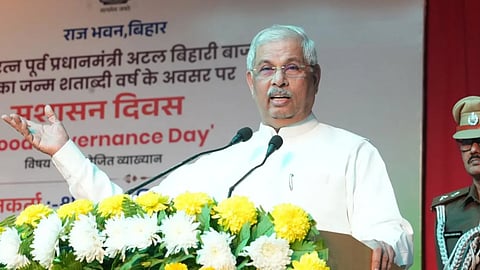
CHENNAI: Two months since reserving his decision, Governor Rajendra Vishwanath Arlekar finally gave his assent to the Tamil Nadu Private Universities Bill, marking a historic development, Higher Education minister P Viswanathan said on Saturday.
Speaking to reporters at Sathyamurthy Bhavan after attending the Tamil Nadu chapter's annual State summit of the All India Professionals' Congress (AIPC), the minister said the legislation was introduced to address the growing number of students going abroad for higher education, resulting in a significant outflow of foreign exchange. The Bill aims to provide students in Tamil Nadu with educational facilities and opportunities comparable to those available overseas, while reducing expenditure on foreign education, he said.
The amended legislation removes the existing provision under Section 4(a) of the Tamil Nadu Private Universities Act, 2019, which mandates a minimum of 100 acres of contiguous land to establish a private university. It also reduces the mandatory permanent endowment fund under Section 46(1) from Rs 50 crore to Rs 25 crore.
Citing the scarcity of land within the Greater Chennai Corporation (GCC) limits, the government has prescribed a minimum requirement of 12 acres of contiguous land for establishing a private university within the GCC area. The requirement has been fixed at 18 acres for other municipal corporations and municipal councils, and 25 acres for the rest of the State.
In September, the governor had given assent to 12 of the 13 Bills passed by the TVK-led government, reserving his decision on the Private Universities Bill, which was, at the time, speculated to have been referred to the President for her nod.
The Bill had faced opposition from Left parties, which provide outside support to the TVK government, and the PMK when it was passed in the Assembly.
The previous DMK government had also introduced a similar amendment in 2025 to relax the land requirement. However, it was forced to withdraw the Bill after it was passed by the Assembly, following opposition to the proposed changes.