
- Chennai
- Tamil Nadu
- India
- World
- EntertainmentEntertainment
- Business
- Sports
- Lifestyle
- Technology
- Videos
- Explainers
- Editor's Picks

Healthcare presents perhaps the strongest case for subsidiarity. Effective diagnosis, counselling, and treatment demand more than technical competence. They require familiarity with the patient’s language, culture, social circumstances, and local disease burden. In clinical care, communication failures can be as harmful as errors of diagnosis. The Constitution originally recognised this reality by assigning public health, hospitals and dispensaries to the States under Entry 6 of the State List.
Education was, likewise, a State subject under the former Entry 11, subject only to the Union’s power under Entry 66 of the Union List to coordinate and determine standards. The 42nd Constitutional Amendment, 1976, altered this balance by transferring education, including medical education, to the Concurrent List under Entry 25.
Thereafter, expansive Union legislation and broad judicial interpretations of Entry 66 steadily enlarged central control over domains previously within State competence. The Supreme Court-created All-India Quota deepened this erosion by diverting seats in medical colleges established and funded by States to central counselling, weakening the connection between medical education and local health needs, particularly in rural areas.
National examinations such as NEET and the proposed NExT, fiscal conditionalities, and micromanaged Centrally Sponsored Schemes have further accelerated this centralising drift.
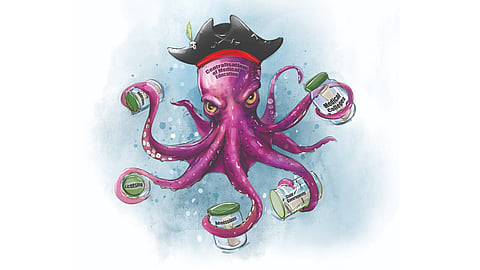
This trend culminated institutionally in the National Medical Commission (NMC) Act, 2019, enacted under Entry 66 of the Union List, and presented as a historic reform of medical education and professional regulation. Its predecessor, the Medical Council of India (MCI), had forfeited public confidence through pervasive corruption, conflicts of interest and weak accountability, prompting the Parliamentary Standing Committee’s 92nd Report of 2016 to call for comprehensive restructuring.
Yet, by replacing the flawed but participatory MCI with the tightly centralised NMC, the Parliament introduced a different infirmity: a profound federal imbalance in medical education and professional regulation.
The MCI was broadly representative. The Union, States, university medical faculties, State Medical Councils and nationally elected medical practitioners enjoyed distinct and continuing channels of institutional participation. Its president and vice-president were elected by the council.
The NMC marks a decisive transition from an elected regulator to a selected one. All its 33 members — Chairperson, 10 ex officio members and 22 part-time members — are appointed by the Union government. Three part-time members are centrally selected experts. The remaining 19 — 10 nominees of States or Union Territories and 9 of State Medical Councils — are chosen by rotation and draw of lots for two-year terms. Several States therefore have no vote in the Commission at any given time. Major medical hubs such as Uttar Pradesh, Maharashtra, Tamil Nadu, Karnataka and Telangana may remain excluded for years. In 2025, administrative delay in conducting the draw left the NMC without any State representation for six-and-a-half months.
The Medical Advisory Council under Sections 11-13 includes nominees from every State and Union Territory, State Medical Councils, and other institutions, but it’s merely advisory. The NMC is neither bound by its recommendations nor required to explain their rejection.
In the Constituent Assembly, Dr BR Ambedkar defended Entry 66 as conferring only the ‘limited extent’ of power needed to coordinate institutions and prevent standards from declining. Yet the NMC now enables the Union to control courses, seats, admissions, licensure, infrastructure, faculty, hospital facilities, clinical material, and teaching requirements — matters far beyond the framers’ conception of Entry 66. Section 45 makes Union policy directions binding on the NMC, while Section 46 empowers the Union to issue directions to State Governments for implementing the Act.
This arrangement sits uneasily with India’s federal structure. States bear the burdens of healthcare delivery, expenditure and democratic accountability, yet are reduced from constitutional partners to intermittently consulted subjects.
Centralisation has not eliminated corruption; it has merely created a single window for rent-seeking. In July 2025, after the CBI booked 34 persons, including NMC and Union Health Ministry officials, for alleged bribery in medical-college approvals, The Lancet questioned the Commission’s transparency, accountability and ethical governance, calling it a rebranded version of its discredited predecessor.
In the QS World University Rankings 2026 for Life Sciences and Medicine, no Indian institution entered the global top 200. AIIMS New Delhi ranked 217, Manipal Academy of Higher Education 286, University of Delhi 399, and PGIMER Chandigarh was in the 451–500 band. By contrast, the global top 200 included 47 institutions from the US, 13 from Germany, 9 from Canada, and 8 from Australia.
Hospital rankings tell a similar story. In the Newsweek-Statista ‘World’s Best Hospitals 2026’ list, only four Indian hospitals entered the global top 250: Medanta, Gurugram (rank 110), AIIMS New Delhi (115), PGIMER Chandigarh (214), and CMC Vellore (245).
According to WHO and OECD statistics, India’s doctor-population ratio, counting only MBBS doctors, is around 0.7-0.9 per 1,000 people, below the WHO norm of one doctor per 1,000 and far behind the US (2.7), Germany (4.6), Canada (2.9), and Australia (4.2).
World Bank and OECD data show that India averages only 1.6 hospital beds per 1,000 people, with just 0.50 in government hospitals. The corresponding figures are: USA (2.7 total, 0.57 public), Germany (7.5, 3.60), Canada (2.5, 2.48), and Australia (3.8, 2.50).
These disappointing outcomes show that centralisation and regulation have delivered neither excellence nor adequate capacity in India’s health sector.
The NMC Act distributes regulatory functions among four autonomous boards: Under-Graduate Medical Education Board, Post-Graduate Medical Education Board, Medical Assessment and Rating Board, and Ethics and Medical Registration Board.
Section 28 requires prior permission from the Medical Assessment and Rating Board to establish a new medical college, commence a postgraduate course or increase seats. This converts standard-setting into a centralised approval regime. But national standards do not require every proposal from colleges, universities and States to travel to the NMC or its Boards for prior sanction.
Once the NMC prescribes minimum norms, universities or State authorities should be empowered to approve compliant proposals and mandatorily intimate the Commission. The NMC should retain the power to modify, suspend or cancel approvals that violate its standards, and do sample inspections and audits.
Such a model would preserve national standards while reducing delay, cost, duplication and bureaucratic congestion. The same separation of standards from permissions should govern other Union regulators operating under Entry 66, including the UGC and AICTE.
Unlike the UGC and AICTE, the NMC is not a grant-giving body. It prescribes standards imposing substantial capital and recurring expenditure on public institutions and may penalise non-compliance, but contributes nothing towards meeting those costs.
Even the grant-giving role of the UGC and AICTE has contracted sharply. For example, UGC’s total grant disbursal fell from Rs 8,905 crore in 2014-15 to Rs 3,336 crore in 2025-26, overwhelmingly favouring Central institutions. During this period, grants to State universities and colleges declined from Rs 1,185 crore (13.3% of the total) to a mere Rs 62 crore (1.9%).
Especially worrying is the Union’s extension of the NMC model to general higher education through the Viksit Bharat Shiksha Adhishthan (VBSA) Bill, 2025, which seeks to merge UGC, AICTE and NCTE into a single regulator. The VBSA, however, is not conceived as a grants commission; it would regulate without carrying a developmental purse. This raises a basic question: can national standards be sustained through unfunded mandates?
The same concern animated the Constituent Assembly’s debate on Entry 66 of the Union List. PS Deshmukh, a member of the Constituent Assembly, called it “hopelessly ill-conceived” and argued that compulsory standard-setting would “acquire legitimacy only if accompanied by block grants and regular grants-in-aid.” He noted that mature federations avoided top-down commands unbacked by fiscal aid. Naziruddin Ahmad, another member, was emphatic: “Finance is the essence of the matter. In fact, if the Centre should interfere in education, which is essentially provincial, it should be by financial assistance, not merely by advice gratis or by criticism or comments.”
India cannot hope to regulate medical education and hospitals into excellence while starving them of funds. Rules cannot replace resources. Without grants, both the NMC and the proposed VBSA risk becoming cures worse than the disease.
The Justice Kurian Joseph Committee on Union-State Relations has therefore recommended restoring education, including medical education, to the State List, aligning it with the tier delivering public health. The Union’s role under Entry 66 should be limited to broad minimum standards, without intruding upon State authority or university autonomy.
Weaker State institutions should be strengthened through capacity-building and greater financial support, not centralised control. Every State and Union Territory with a legislature should enjoy permanent representation in the NMC.
A nation cannot command its institutions to become world-class; it must give them the resources, and the freedom, to become so.
(The author is a retired IAS officer of Tamil Nadu cadre, former Vice-Chancellor of Indian Maritime University, Chennai, and Member, High-Level Committee on Union-State Relations constituted by the Government of Tamil Nadu)