
- Chennai
- Tamil Nadu
- India
- World
- EntertainmentEntertainment
- Business
- Sports
- Lifestyle
- Technology
- Videos
- Explainers
- Editor's Picks

Farmers say leaf output has already dropped drastically like never before. L Manogaran, founder of the Small Tea Producers Association of Nilgiris in Kotagiri, said growers who would normally harvest around 500 kg of green leaves per acre every month were now obtaining only about 200 kg.
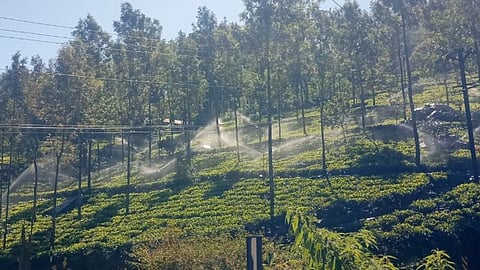
“I have never seen such a drop in yield in the last 50 years, since I became involved in tea cultivation.Some growers have resorted to sprinklers to offset the impact of the dry spell. But the cost of the equipment and its operation remains beyond the reach of many small tea producers,” Manogaran said.
P Raja, senior scientist at the Krishi Vigyan Kendra (KVK) of Tamil Nadu Agricultural University (TNAU) in The Nilgiris, said intermittent showers had so far helped limit the immediate impact of the rainfall deficit. However, a continuation of dry conditions could cause significantly greater damage to plantations.
“Tea plantations have survived with intermittent rains, so the impact may not be seen immediately. But if there is no further rainfall, the annual average yield per acre, which used to hover around 7 to 8 tonnes, may reduce by 50 per cent. So far, the yield has come down by 10 to 20 per cent,” Raja said.
A prolonged moisture shortage could also increase the interval between successive harvests, reducing the volume of green leaves reaching tea-processing units and further affecting growers' incomes.
The fall in production has not, however, resulted in a corresponding rise in tea leaf prices as its procurement prices remain less than Rs 20 per kg. Raja said tea prices were determined largely by global market conditions. Consequently, a decline in local production did not automatically translate into better prices for growers.
The southwest monsoon, which normally extends from June to August, is particularly important to tea plantations in Ooty and Gudalur. Kotagiri receives rainfall from both the Southwest and Northeast Monsoons, while Coonoor receives a larger share of its rainfall from the Northeast Monsoon.
“With the Southwest Monsoon reaching its fag end, there has been a total deficit of 55 per cent due to the Super El Niño effect.The current season is the most severe Southwest Monsoon deficit in The Nilgiris in the past 15 years,” Raja said.
DOWNHILL DATA
SW monsoon deficit:
283 mm — rainfall received in 2026
874 mm — normal rainfall
1,038 mm — rainfall during the corresponding period last year
Cultivation decline:
17,300 acres — normal vegetable cultivation area
40% decline in area under cultivation
36,000 small and marginal vegetable growers affected
70% of Nilgiris’ population depends on farming for livelihood
Yields plunge:
Garlic: From 4 to 2 tonnes/acre
Potato: From 8 to 3 tonnes/acre
Beetroot: From 15 to 8 tonnes/acre
Cabbage: From 35 to 20 tonnes/acre
Annual tea yield at risk
7–8 tonnes/acre: Normal annual yield
10-20%: Current decline
50%: Fall predicted if dry conditions continue