
Tiruvannamalai
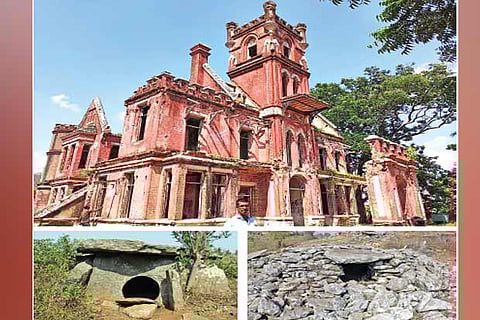
Megalithic structures or prehistoric monuments made of or containing large stones, including ancient dwellings and burial chambers, located deep in the Jawadhu hills are slowly being destroyed by local people who are unaware of their historic value, claimed Vellore-based historian Tamil Vannan.
“If the area is properly excavated, it could lead to finds which could be as great as that at Keezhadi in Sivaganga district,” Vannan said. “The location of the structures inside the forest in the Jawadhu is the main reason why it has not attracted attention, except for some research work carried out by students,” he added.
The area especially near Beeman falls in the Jamunamarudur area abounds in burial chambers and dwellings dating hundreds of years ago, but locals are ignorant of their importance usually take away the stones to use them as washing slabs for clothes, claimed the historian. “In fact, I found a house with such a stone which had inscriptions, and the house owner told me that it was being used to dry clothes and that he did not know anything about the inscriptions,” Vannan said.
S Balamurugan from the Tiruvannamalai Centre for Historical Research said, “Local people here now have some awareness about the historical importance of such structures, but since the area is difficult to access, hence officials hesitate to initiate action to protect them.”
“About four years ago, former collector Rajendran had sent a proposal to the government requesting the state archaeological department to take over the site, but no action has been taken yet,” said Balamurugan.
Another intriguing factor is the according to the local folklore, people who inhabited the area hundreds of years ago were quite short and are called ‘kulla manithar’ (pygmies or lilliputs). “People came to this conclusion after studying the size of their dwellings and its entrances. They are so small that only really short people could use them” said Vannan.
Despite this, no research has been undertaken in the area on this topic and it continues intrigue visitors who visit the area. “As only a trained guide can show them the structures, the government should encourage research in this area as it can throw up interesting finds” said a local resident of Tiruvannamalai who is aware of the history of the megalithic structures, requesting anonymity.
“These structures date between 1000 BC and 300 AD and yet, no excavations have been undertaken in the area,” said Vannan.
Both Vannan and Balamururgan conduct heritage walks in their respective districts and while “this has led to increasing participation by out of town visitors, the government is yet to realise its importance” said a former official in Vellore.
“About 10,000 people visit Keezhadi per day to explore the excavations, the government could make a substantial amount of revenue if it does the same here and charges just Rs1 per head from the visitors,” Vannan said. This could attract the government’s attention, an official said. “The government, however, does not seem interested in a burial cairn right in the heart of Vellore town,” he added.
“Not only ancient structures, but even those from 1750s fail to attract government’s attention,” claimed local history buffs. They cited the example of the French Chateau at Poosimalaikuppam which is about 16 kilometres from Arani and is estimated to have been built in the mid-1700s by the then Arani jagirdar. The Chateau is in ruins now. While the walls are crumbling, graffiti by anti-social elements mark the existing structures.
“A sound and light show could highlight several of the bungalow’s facets that even locals are aware of, specially about its lineage,” saidVannan. “Built with imported materials specially from Glasgow, the chateau today popularly called the ‘French castle’ and has many interesting facets which can be used to advantage if only the government tourism department is willing to step in,” said a resident of Arani, not wanting to be named.
Collector KS Kandasamy said a proposal to restore the chateau at an estimated at Rs 4 crore was sent to government. Meanwhile, a private sugar mill has donated Rs 25 lakh toward its restoration under their CSR (corporate social responsibility) project. “Once developed, the place can be used to host lunches and create a sound and light show for tourists,” said Kandasamy.
Visit news.dtnext.in to explore our interactive epaper!
Download the DT Next app for more exciting features!
Click here for iOS
Click here for Android