
- Chennai
- Tamil Nadu
- India
- World
- EntertainmentEntertainment
- Business
- Sports
- Lifestyle
- Technology
- Videos
- Explainers
- Editor's Picks

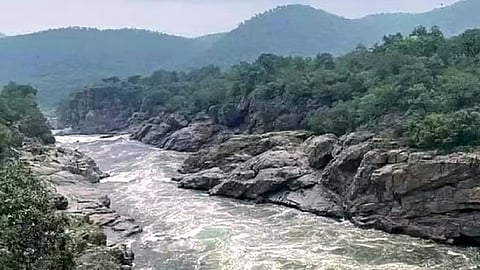
CHENNAI: Karnataka's claim that the proposed Mekedatu dam is meant to meet Bengaluru's drinking water needs is not supported by field-level findings, which indicate no drinking water shortage in the city, the Tamil Nadu Sectoral Experts Federation said on Thursday, asserting that the state is instead planning to expand its irrigation area.
The experts said this was why talks between the chief ministers of Tamil Nadu and Karnataka would not resolve the Cauvery water-sharing dispute and could instead work against Tamil Nadu's interests.
Retired senior Public Works Department engineer A Veerappan, hydrology expert S Janakarajan, State Platform for Common School System general secretary Prince Gajendrababu, advocate Vetriselvan of Poovulagin Nanbargal and Electricity Department Engineers' Association coordinator S Gandhi made the remarks at a press conference.
The federation said Karnataka's proposal to construct the Mekedatu dam, along with plans for a new dam at Rasimanal and to raise the height of the Mettur reservoir by 10 feet, were among the key issues concerning Tamil Nadu.
It said Karnataka was also spreading incorrect information that Tamil Nadu's consent was not required for the Mekedatu project. According to the experts, a Supreme Court judgment requires the consent of Tamil Nadu, Puducherry and Kerala, among the Cauvery basin states, for constructing a new dam across the Cauvery.
They said Karnataka's detailed project report for the Mekedatu dam had been returned as it did not fulfil the required conditions.
The federation said more than 50 rounds of talks held between the two states in the 1990s had failed to resolve the Cauvery dispute.
"The Mekedatu dam cannot be constructed based on the Supreme Court judgment and the Cauvery Water Disputes Tribunal award, and we will not allow it to be constructed," the experts said.
They also said constructing dams at Rasimanal and Hogenakkal to store additional Cauvery water was not immediately feasible. Any new dam across the Cauvery would require approval from the Central Water Commission and Karnataka, which they said was unlikely in the present circumstances.
A new dam with a storage capacity of 10-15 TMC could take three years to construct and cost between Rs 1,500 crore and Rs 3,000 crore, they said.
As an alternative, the experts suggested filling more than 200 lakes and irrigation tanks in drought-prone areas on either side of the Cauvery basin through water-lifting projects.
They also said the proposed Godavari-Cauvery river-linking project was not feasible and urged the Tamil Nadu government to withdraw its decision to seek the constitution of a new tribunal, saying the move was unprecedented and would not benefit the state.