
- Chennai
- Tamil Nadu
- India
- World
- EntertainmentEntertainment
- Business
- Sports
- Lifestyle
- Technology
- Videos
- Explainers
- Editor's Picks

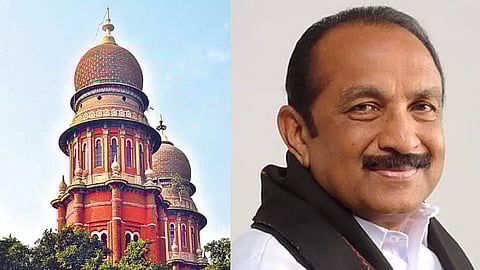
CHENNAI: The Madras High Court has dismissed a writ petition filed by MDMK chief Vaiko in 2013 challenging the central government's order declaring the Liberation Tigers of Tamil Eelam (LTTE) as a banned organisation in the nation, contending that when the said outfit itself did not challenge it, how can a third party make an intervention.
Challenging the 2012 notification extending the ban, Vaiko filed the present writ petition before the Madras High Court in 2013, arguing that there was no proof of the LTTE engaging in activities against the sovereignty of India.
By the time the Division Bench comprising Justices Anita Sumanth and Justice Mummineni Sudheer Kumar arrived at a final decision in the case, the Union government had shifted from a 2-year ban to a 5-year ban on the LTTE, ever since the first one was promulgated in 1992 after the assassination of former Prime Minister Rajiv Gandhi in 1991.
After hearing the submissions on both sides, the Division Bench held that the 2012 notification did not exist as of the date, as the present ban is based on the 2024 notification. Accordingly, the court dismissed Vaiko's writ petition.
Earlier, during the arguments, the Additional Solicitor General, ARL Sundaresan, appearing for the Union Government, submitted that the Tribunal constituted to adjudicate the validity of the ban had dismissed Vaiko's application seeking impleadment as a party to the proceedings, confirming the prohibition. In view of the said dismissal, it was contended that the petitioner was not entitled to maintain the present writ petition.
In response, Vaiko contended that he had filed the petition as a supporter and sympathiser of the LTTE, challenging the legality of the ban. He argued that there was no material to substantiate allegations that the organisation had attempted to merge Tamil Eelam with India, and therefore the prohibition was illegal and liable to be set aside.
Following the assassination of former Prime Minister Rajiv Gandhi in May 1991, the central government, in 1992, banned the LTTE. It was periodically extended every two years through fresh notifications, and later, once every five years.