
- Chennai
- Tamil Nadu
- India
- World
- EntertainmentEntertainment
- Business
- Sports
- Lifestyle
- Technology
- Videos
- Explainers
- Editor's Picks

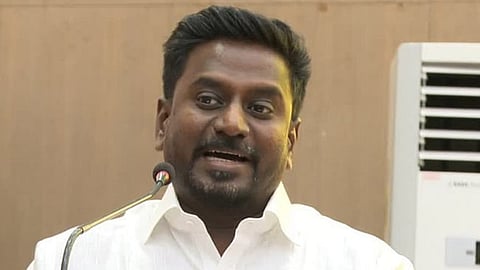
CHENNAI: The State government would take steps to significantly reduce the weight of school bags and replace text-heavy books with colourful, illustration-rich learning material as part of a child-centric curriculum proposed for government schools from Classes 4 to 8, School Education Minister A Rajmohan announced on Tuesday (July 21).
Releasing the draft syllabus, he said the revised curriculum marked a shift from a teacher-centric approach to child-centric education, with the focus on making learning engaging, inclusive and activity-based.
Referring to his recent visit to the US to study global education practices, Rajmohan said the government had drawn inspiration from international models while framing the new curriculum. He said that while many countries had adopted Science, Technology, Engineering and Mathematics (STEM) education, Tamil Nadu would go a step further by adopting the STEAM approach, integrating arts with science, technology, engineering and mathematics.
As part of the changes, mathematics will be taught through storytelling to help children grasp concepts in a more enjoyable manner instead of relying on rote learning. Science education will also be delivered through interdisciplinary methods that combine scientific concepts with arts and creativity.
Rajmohan said textbooks would contain fewer text-heavy pages and more illustrations, with QR codes enabling students to access audio and video lessons using mobile phones at home. The curriculum would also place emphasis on competency-based learning rather than merely completing the syllabus.
The minister said students would be introduced to AI tools and prompt engineering, while the curriculum would also nurture natural intelligence by promoting compassion, critical thinking and problem-solving skills. He stressed that AI would not replace human jobs but that students should be equipped to use emerging technologies effectively.
Rajmohan said the revised curriculum for Classes I to III had already been finalised, teachers had completed training under the "training of trainers" model, and the required learning materials had been printed and dispatched to schools. He added that draft syllabi for Classes IV to XII had also been prepared, with some of them already uploaded online to invite suggestions from the public and educationists.
Urging teachers and other stakeholders to embrace the reforms, the Minister said the curriculum had been redesigned with the future of children at its core. "The only thing we need to do now is adapt ourselves to child-centric education," he said, adding that the success of the reforms depended on collective support for the new approach to teaching and learning.
The revised curriculum will also include lessons on respecting parents, gender equality, sharing and humanitarian values, besides giving greater prominence to India's scientific achievements, archaeology and cultural heritage.
Rajmohan said dedicated newspaper reading sessions would be introduced in schools to improve reading habits among students.
Highlighting the government's focus on scientific learning, he said efforts were under way in collaboration with ISRO to encourage government school students to design small satellites.
He expressed confidence that student-built satellites from government schools could one day be launched into space with ISRO's guidance.
On school administration, he said school recognition and approval processes would be fully digitised to eliminate corruption and ensure that approvals are granted only to institutions meeting prescribed safety and infrastructure standards.
Recalling the Kumbakonam school fire tragedy, Raj Mohan said digitising approvals would help prevent lapses in safety compliance and ensure greater accountability.
He said draft syllabi for higher classes had also been prepared and uploaded online for public feedback. Teacher training for the initial phase of implementation had been completed and learning materials were ready for rollout. He urged teachers to embrace the new curriculum, saying the reforms were aimed at creating classrooms where children learn through stories, activities and exploration rather than fear and rote memorisation.