
- Chennai
- Tamil Nadu
- India
- World
- EntertainmentEntertainment
- Business
- Sports
- Lifestyle
- Technology
- Videos
- Explainers
- Editor's Picks

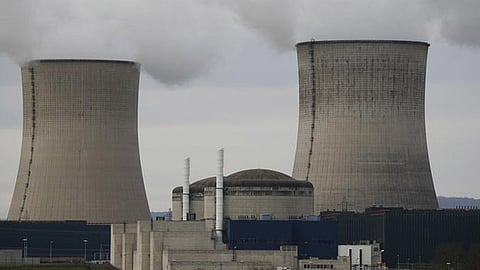
CHENNAI: India’s nuclear power programme reached a significant milestone on Monday, with the 500 MWe Prototype Fast Breeder Reactor (PFBR) at Kalpakkam attaining first criticality at 8.26 pm, marking the beginning of a controlled and sustained nuclear fission chain reaction and strengthening the country’s long-term energy security plans.
The indigenously designed and built reactor has been developed by Bharatiya Nabhikiya Vidyut Nigam Limited at the Kalpakkam Nuclear Complex in Tamil Nadu. With this achievement, India has formally entered the second stage of its three-stage nuclear power programme, a vision conceived by Homi Jehangir Bhabha.
Once fully operational, India will become only the second country after Russia to operate a commercial fast breeder reactor, underlining the global significance of the development.
The milestone reflects decades of scientific effort led by the Department of Atomic Energy and strengthens India’s transition towards reliable, low-carbon energy. It also aligns with the country’s net zero target for 2070 announced by Narendra Modi.
India’s nuclear strategy is built around optimal utilisation of its limited uranium resources and vast thorium reserves through a closed fuel cycle.
In the first stage, Pressurised Heavy Water Reactors use natural uranium to generate electricity, producing plutonium as spent fuel. This plutonium forms the basis of the second stage, where Fast Breeder Reactors generate more fuel than they consume.
The PFBR marks the beginning of this second stage. It is designed to breed Uranium-233 from thorium, paving the way for the third stage, which will rely on thorium-based reactors for long-term energy security.
The PFBR represents decades of indigenous research led by the Indira Gandhi Centre for Atomic Research. It uses uranium-plutonium mixed oxide fuel derived from reprocessed spent fuel of earlier reactors. Its core is surrounded by a blanket of Uranium-238, which is converted into Plutonium-239 using fast neutrons, enabling the reactor to produce more fuel than it consumes.
The design also allows for future use of Thorium-232 in the blanket to generate Uranium-233, forming a bridge to the third stage of the programme. The closed fuel cycle ensures that spent fuel is reprocessed and reused, enhancing resource efficiency.
India’s nuclear power capacity currently stands at 8.78 GW. In 2024–25, nuclear plants generated 56,681 million units of electricity, accounting for about 3.1% of the country’s total power generation.
The sector is poised for expansion, with installed capacity projected to reach 22.38 GW by 2031–32 through indigenous 700 MW reactors and larger units developed with international cooperation. India has also signed civil nuclear cooperation agreements with 18 countries, reflecting growing global engagement.
The attainment of criticality at the PFBR marks a significant technological and strategic shift in India’s nuclear journey. It signals progress from a resource-constrained uranium base towards a thorium-driven future, reinforcing energy security and technological self-reliance.
With policy backing, sustained investment and indigenous expertise, nuclear energy is set to play a more central role in India’s power mix, advancing its clean energy goals and long-term net zero commitment.