
- Chennai
- Tamil Nadu
- India
- World
- EntertainmentEntertainment
- Business
- Sports
- Lifestyle
- Technology
- Videos
- Explainers
- Editor's Picks

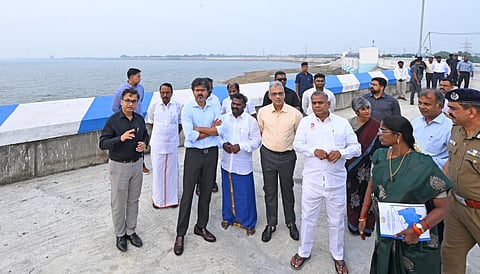
CHENNAI: Chief Minister C Joseph Vijay on Monday inspected Chembarambakkam reservoir and directed officials to closely monitor its water level, inflow and discharge round the clock to ensure public safety during the northeast monsoon.
During the inspection, the CM reviewed the reservoir’s storage, intake tower and bund areas with officials from the Water Resources Department.
He instructed officials to ensure uninterrupted monitoring of the water level, inflow and outflow, and to keep control rooms operational with adequate staff at all times. He also directed them to maintain sluice gates, power supply, backup power facilities and communication networks in full working condition.
Vijay said that if surplus water had to be released, the discharge should be carried out in a phased and regulated manner. Officials were instructed to plan water releases carefully to prevent flooding in vulnerable areas located downstream along the Adyar river.
He further directed officials to provide prior warnings to people living in downstream areas before releasing water and ensure close coordination among the Revenue Department, Police Department, Greater Chennai Corporation and the Metro Water board. He also stressed the need to maintain prescribed reservoir levels throughout the monsoon to preserve flood-buffer storage while ensuring adequate water reserves to meet Chennai’s drinking water requirements.
Ministers N Anand, KA Sengottaiyan, K Thennarasu and RV Ranjithkumar, along with senior officials, accompanied the Chief Minister during the inspection.
As of 6 am on Monday, the water level stood at 14.76 feet against its full reservoir level of 24 feet. The lake had a storage of 1,488 million cubic feet (mcft) against its capacity of 3,645 mcft (41% of its capacity).