
- Chennai
- Tamil Nadu
- India
- World
- EntertainmentEntertainment
- Business
- Sports
- Lifestyle
- Technology
- Videos
- Explainers
- Editor's Picks
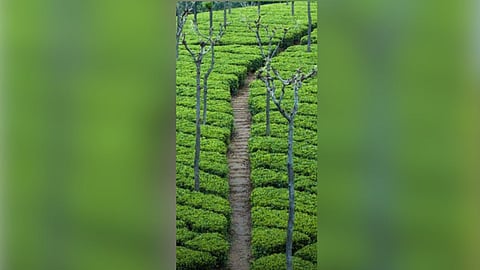
UDHAGAMANDALAM: The Nilgiris tea industry is facing an escalating climate threat as changing rainfall patterns, rising temperatures, and prolonged dry spells linked to Super El Nino events are weakening tea bushes, reducing yields and increasing pest attacks.
“The greatest challenge for tea cultivation is no longer the total amount of annual rainfall but its increasingly erratic distribution. Short bursts of heavy rain followed by prolonged dry periods are creating severe moisture stress, even in areas receiving normal annual rainfall. Since tea is harvested as young shoots, even small climate changes tend to affect shoot growth, yield and quality,” said P Murugesan, Advisory Officer at UPASI Tea Research Foundation’s Regional Centre in Coonoor.
In his study, ‘Super El Nino: Mitigation and Adaptation Strategies for the Nilgiris', he claims that long-term observations show that average temperatures have risen in the Nilgiris by about 0.5 degree celsius, while dry days have become more frequent and frost and hailstorm-affected areas have expanded.
“The average rainfall in the district declined by 31 per cent from 173.3 cm in 2021 to 119.4 cm in 2025, while tea productivity fell by 11.8 per cent from a peak of 2,315 kg per hectare in 2023 to 2,042 kg in 2025,” he said.
To safeguard plantations, the UPASI Tea Research Foundation has recommended a series of climate-resilient interventions. Foremost among them is the large-scale planting of ‘gliricidia sepium’ as a shade tree, as it can reduce soil temperature by 3 degree celsius to five degree celsius, improve moisture retention by up to 25 per cent, enrich soil fertility through nitrogen fixation and provide valuable green mature.
Other key recommendations include establishing micro ponds in tea estates to harvest rainwater, vettiver grass barriers to reduce soil erosion, post-pruning lime washing to minimise heat stress, foliar nutrient sprays, and retaining mother leaves while extending plucking intervals during drought.
Emphasising that long term sustainability depends on protecting tea bushes rather than maximising short term harvests, the study states that science-driven adaptation is essential to sustaining long term productivity of the plantation industry.
