
- Chennai
- Tamil Nadu
- India
- World
- EntertainmentEntertainment
- Business
- Sports
- Lifestyle
- Technology
- Videos
- Explainers
- Editor's Picks

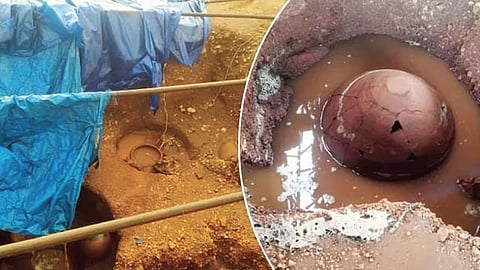
CHENNAI: More than 10 ancient burial urns at the Adichanallur archaeological site in Thoothukudi district have been submerged in rainwater following recent showers, raising concerns over the safety of historically significant artefacts unearthed by the Archaeological Survey of India (ASI).
According to a Daily Thanthi report, the incident has also drawn attention to the slow progress of permanent roofing work at the excavation site, with concerns mounting ahead of the northeast monsoon.
Adichanallur, located on the banks of the Thamirabarani river, is an important archaeological site where the ASI conducted excavations four years ago. A site museum was established to enable visitors to view ancient burial urns and other artefacts in their original locations.
Union Finance Minister Nirmala Sitharaman inaugurated India's first site museum at Adichanallur on August 6, 2023, and laid the foundation stone for a world-class museum. However, construction of the proposed museum has remained stalled for various reasons.
The excavation area was divided into three zones A, B and C. Excavations at Site C, where a large number of artefacts were discovered, were carried out under temporary roofing.
Although work to install a permanent roof in this section has commenced, progress has been slow. The lack of adequate protection has left the excavation pits and the artefacts exposed to changing weather conditions.
Recent heavy rainfall in the area caused water to accumulate in the excavation pits, leaving more than 10 ancient burial urns submerged. The situation has raised fears that prolonged exposure to water could damage the urns and the historical materials preserved inside them.
The incident has renewed concerns over the maintenance of the archaeological site and the need to protect the remains from further deterioration.
Writer Muthalankurichi Kamarasu alleged that the ASI had failed to ensure proper maintenance of the artefacts, leaving them exposed to the sun and rain.
He urged officials to expedite the construction of a permanent shelter before the Northeast Monsoon intensifies and take immediate steps to drain the accumulated rainwater and safeguard the archaeological remains.