
- Chennai
- Tamil Nadu
- India
- World
- EntertainmentEntertainment
- Business
- Sports
- Lifestyle
- Technology
- Videos
- Explainers
- Editor's Picks
WELLINGTON: When Ajit Agarkar's term as chairman of the national selection committee officially ended, Gautam Gambhir had hoped that "history will be kinder" to the former Mumbai pacer, who managed to shake up Indian cricket with his bold calls.
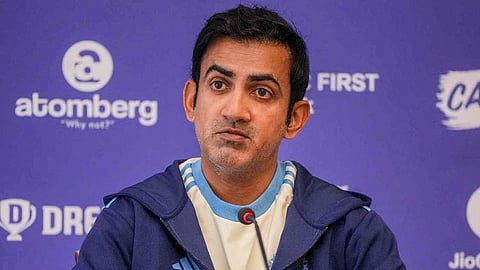
The India head coach could perhaps relate to Agarkar. After all, Gambhir knows a thing or two about being minutely scrutinised for every decision -- big or small -- in Indian cricket. He too is often the first to be blamed when things go awry in the most followed sport in the country.
"...he is a passionate man. There are no grey shades for him. It is either black or white," Gambhir's former teammate and close friend Vijay Dahiya told PTI when asked if the head coach gets a raw deal on 'Opinion Street'.
That Gambhir wears his heart on his sleeve is hardly a secret. He likes to back his decisions to the hilt.
"Gauti when he was Delhi or Kolkata Knight Riders captain and then mentor, his idea is always to get the assigned job done....whether people give him enough credit or not, he isn't the guy who is even bothered about public validation for a job well done," Dahiya said.
Gone are those days, when Sachin Tendulkar, Sourav Ganguly, Virender Sehwag, Yuvraj Singh and Suresh Raina bowled anything between six to even 10 overs across formats to take the burden off front-line bowlers.
With that kind of bowling diversity no longer at his disposal, Gambhir prefers a line-up that bats deep.
Those who work with him would tell you that when Gambhir watches cricket, he is not merely observing, he is building strategy. Ask Sitanshu Kotak or Morne Morkel, there is always a plan up for a debate or discussion when Gambhir is in the vicinity.
Standing at the Basin Reserve during India's net session, Gambhir might have felt a sense of deja vu.
In 2009, a feisty Gambhir used every ounce of his energy to score 72 (Hamilton), 136 (Napier) and 167 (Wellington) in India's last Test series win in New Zealand.
That was Test match batting at its best and his 12-hour match-saving knock at Napier is part of Indian cricket's folklore.
If the current Indian batting can replicate that resolve in the series, beginning on Thursday, the visitors will go home with renewed hope about their World Test Championship chances.
For Gambhir, who mostly finds himself at the rough end of the stick, it would be a redemption of sorts after home losses to South Africa and New Zealand in the past couple of years.
"Some people do a job and some people are invested in a job. With Gauti, assignment is investment. If things don't go well, he takes it all on himself. One thing possibly he needs to do is switching off. He is never switched off," said Dahiya.
Two series wins in New Zealand with short turnaround time should be lauded but perhaps one of India's best tacticians would probably move on to the next challenge, hoping not to slip up instead of revelling in the moment.
It's largely because he is a non-conformist with strong likes and dislikes and these are traits that invite often harsh scrutiny.
"He could have a strong liking for someone and it doesn't mean he dislikes someone else. I can love running. Does that mean I hate walking?" Dahiya asked.
Just as every success belongs first and foremost to the players, every failure cannot be perceived as Gambhir's handiwork.
There are decisions in which captains Shubman Gill (Test and ODI) and Shreyas Iyer (T20) are also stakeholders.
This particular series possibly will be Gambhir's biggest Test as India's red-ball coach factoring in conditions and opposition. But unlike Napier and Wellington of 2009, he can't do it all by himself.
The head coach would need the team to fire as much as the team needs its gaffer.