
- Chennai
- Tamil Nadu
- India
- World
- EntertainmentEntertainment
- Business
- Sports
- Lifestyle
- Technology
- Videos
- Explainers
- Editor's Picks
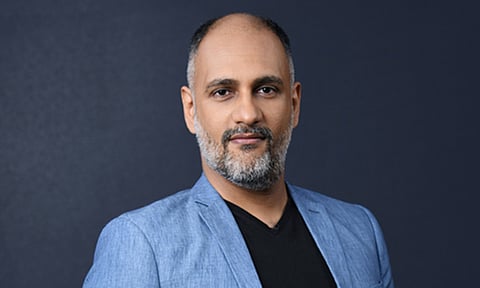
NEW DELHI: The era of "randomly" scheduling bilateral series is over but the much-debated ODI format can continue to survive and thrive with its place "inextricably" linked to the World Cup, International Cricket Council (ICC) CEO Sanjog Gupta has asserted in an interview to PTI.
Gupta, a leading figure in the business of sport, had joined the ICC in July last year. He shared his thoughts on the Test and one-day formats at a time when their future has been constantly debated in the age of mushrooming T20 leagues.
"The era of randomly scheduled bilateral series has to come to an end, because countries will not be able to sustain cricket without context, culture, competition and competitiveness, which require significant investment of resources, both financial and non-financial," Gupta said.
"It's important to stay focused on the four levers which drive attention and affiliation -- context, culture, competition and competitiveness -- and ODIs can continue not just to survive, but thrive.
"There is a place for the format in the product portfolio, which is inextricably linked to men's and women's ICC Cricket World Cups. We need to look at what we want the format to stand for and how we want it to evolve, including the expanse of participation," he noted.
Bilateral cricket is decided exclusively by the member boards without ICC's intervention. The world body only handles the scheduling of multi-national competitions like the World Cups and the World Test Championship.
The Boards retain the sponsorship and media rights of bilateral engagements.
As things stand, only the big three -- India, England and Australia -- can afford to play Tests while the other full members are struggling to monetise the longest format.
ODIs too have become less attractive in the age of T20s, the chosen format for the growth of the game globally.
Gupta, a former head of sports at JioStar, said cricket can learn from marquee events in other sports -- such as the Wimbledon in tennis and The Masters in golf -- to engage with fans across age groups.
"Our ambition has to be growth; our ambition should never be to maintain the status quo. Because in this world, where population is growing, attention is getting disaggregated and affiliation is hard to sustain, if you're not growing, you're dying," he warned.
"There is obviously value in high-quality Test cricket. There is prestige, legacy and a sense of heritage associated with it, but if prestige, legacy and heritage are not made relevant and amplified, then the product can become burdensome.
"Wimbledon and The Masters are examples of prestige events looking at ways to reinvent themselves and remain relevant by using their premium status to their advantage," he said.
Gupta said Test cricket needs to be served in a manner that is appealing to the new-age audience.
"We have to focus on the experience of Test cricket and ensure that fans engaging with it are being served a viable and appealing product," he said.
Gupta acknowledged that Test cricket remains a high-value product and the World Test Championship has been successful in adding more meaning and context to the longest format.
However, he also noted that the prestige associated with Tests and the format's commercial viability should be viewed from the same lens.
"Every time there is conversation around the commercials of Test cricket, the passion, pride and legacy tend to override the conversation around the economics. I don't think the answer is necessarily binary, and I don't think it's a question solely for Test cricket to answer but one which must be asked of all our products across formats and events.
"Our primary tool of global growth is T20 cricket, but that does not mean we don't focus on growing the value or engagement around ODIs or Test cricket. The World Test Championship Final is now an event of significance and one that didn't even exist seven years ago," he said.
In case of 50-over cricket, PTI understands that there have been discussions in the ICC to create a dedicated window for ODIs heading into the World Cup.
Talking more about Test cricket, Gupta highlighted the pressing need for better scheduling outside the big three nations.
"We will continue to invest in growing the status, significance and spectacle associated with cricket's marquee events. Test matches in certain countries are of immense fan value, but can we focus more on providing Members with opportunities to build occasions of appointment and significance in Test cricket?
Gupta said Test cricket needs to be scheduled "optimally" with adequate marketing support.
"That has to be by virtue of the World Test Championship having more meaning and a continuing narrative, by virtue of Test cricket being scheduled optimally, by virtue of Tests receiving adequate positioning and marketing support, by virtue of the competitive standards of the two teams and playing conditions being offered, and fans being promised cricket which is going to be compelling," he said.
