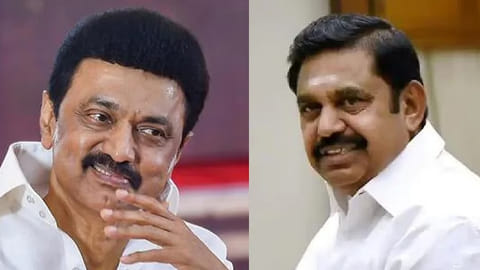


CHENNAI: As the campaign trail heats up, so too has the rhetoric, and not in ways the rulebook would approve, with the Model Code of Conduct (MCC) remaining a spectator to political opponents resorting freely to personal attacks.
What began as routine political sparring has spiralled into a volley of personal barbs between Dravidian rivals, AIADMK and DMK, raising uncomfortable questions about how closely leaders are adhering to the poll code, let alone the moral code of conduct.
On paper, the MCC is unambiguous: campaigns must stay focused on policies, governance, and track record. On the ground, however, the tone has drifted far from that script.
At the centre of the latest flare-up is an intensifying exchange between Deputy Chief Minister Udhayanidhi Stalin and Leader of the Opposition Edappadi K Palaniswami, which has, for now, ended up at the doors of Chief Minister MK Stalin.
Udhayanidhi, while canvassing support, reached back into political memory invoking the Koovathur resort episode and alluding to past controversies surrounding the AIADMK leadership, including the infamous crawling of Edappadi Palaniswami on VK Sasikala's feet ahead of becoming CM. The remarks, laced with political insinuation, quickly set the stage for a sharper rebuttal.
Palaniswami’s response was anything but restrained. In a remark that triggered immediate backlash, he suggested that had the COVID-19 pandemic unfolded under DMK rule, Chief Minister MK Stalin might not have survived, a statement the ruling party described as crossing the line from politics into personal attack.
Stalin, in turn, chose to counter by recalling how he surmounted far bigger challenges. He invoked his imprisonment during the Emergency-era MISA, framing resilience as his answer. “If I did not fear torture in prison, why would I fear COVID?” he asked, turning the exchange into a contest of endurance as much as rhetoric.
The escalation did not stop there. DMK organising secretary RS Bharathi termed Palaniswami’s remarks “derogatory”, signalling simmering anger within the party ranks. The AIADMK leader, however, stood his ground, arguing that his comments were merely in response to provocation and referred only to Stalin's abscence then, a familiar refrain in an increasingly tit-for-tat campaign.
Lost in this back-and-forth is the spirit of the code of conduct itself.
The MCC explicitly bars candidates from exploiting divisions or indulging in unverified allegations. It draws a clear red line: criticism must target policies and governance not personal lives, unless directly linked to public duty.
It also prohibits appeals to caste or communal sentiments and restricts the use of religious spaces for electoral gain. These are the safeguards meant to keep campaigns civil, focused, and fair, which are now thrown to the wind.
Yet, as the rhetoric sharpens and the personal attacks take precedence over the political, those safeguards appear to be under strain.
With both sides digging in and the campaign entering a decisive phase, the larger question lingers: in the battle for votes, are the rules of engagement being quietly rewritten?